


How to Become an RN: Navigating Accelerated Nursing Programs


Learn more about the benefits of a 12-month nursing program
You already have a bachelor's degree. Maybe you studied economics, ran protocols in a research lab, or spent six years in marketing before realizing you wanted work that touched people more directly. Now you are wondering how to become an RN, and whether changing course means starting over.
It does not. Your first degree still counts, and accelerated nursing programs are built specifically for people like you. Here is what the path looks like, from prerequisites to licensure.
What Registered Nurses Do
A registered nurse is a licensed healthcare professional who provides and coordinates patient care. Nursing practice covers patient assessment, care planning, medication administration, and patient education, in collaboration with physicians, therapists, and families.
That coordinating role separates an RN from a licensed practical nurse (LPN), who practices under supervision with a narrower scope. Nursing care happens almost everywhere: hospitals, clinics, schools, home health agencies, and public health departments. Registered nurses held about 3.4 million jobs nationally, according to the U.S. Bureau of Labor Statistics.
What Education Is Needed to Become a Registered Nurse?
Every path to licensure ends the same way, with the NCLEX-RN exam. Where they differ is time, cost, and where they lead afterward.
Associate Degree in Nursing (ADN)
An Associate Degree in Nursing is a two-year program, usually offered at a community college. It is the answer to the common question, "What is a two-year RN degree called?" An ADN qualifies you to sit for the licensure exam at the lowest upfront cost.
The tradeoff shows up later. Many Boston-area hospitals prefer or require a bachelor's degree, and research has associated higher proportions of BSN-prepared nurses with better patient outcomes.
Bachelor of Science in Nursing (BSN)
A Bachelor of Science in Nursing is the traditional four-year route and the typical entry-level nursing education for the profession. A BSN degree adds coursework in nursing theory, research, leadership, and community health, which is why it opens more doors into management and graduate study.
Accelerated Bachelor of Science in Nursing (ABSN)
An accelerated program is a second-degree route for students who already hold a bachelor's degree in a field other than nursing. At Mass General Brigham University of Health Professions, the Accelerated Bachelor of Science in Nursing program runs 12 months full time or 24 months part time, with spring and summer starts. The next section covers how that works.
LPN-to-RN and Nursing Assistant Bridge Routes
Some people build toward nursing school in stages. Certified nursing assistant training takes weeks and gets you into patient care quickly, LPN programs take about a year, and LPN-to-RN bridge programs credit that experience toward a degree. This route takes longer overall, but it lets you earn while you learn.
What Is an ABSN?
An ABSN is a second-degree nursing program for students who already hold a bachelor's degree in another field. Rather than starting your education over, it builds on the college coursework you have already completed.
You skip the general education requirements you satisfied the first time and study nursing exclusively. That focus is what compresses a four-year degree into roughly one year of full-time study.
The tradeoff is intensity. You cover the same nursing content in a fraction of the time, which is why most ABSN students are in class or clinical five to six days a week.
How Long Does It Take to Become an RN?
Timelines assume prerequisites are already finished:
- Accelerated BSN: 12 months full time, or 24 months part time
- Associate Degree in Nursing: about two years
- Traditional BSN: about four years
- LPN-to-RN bridge: one to two years after LPN licensure
Add three to nine months for prerequisite coursework if you need it, plus several weeks for licensure processing after you pass the exam.
Steps to Become a Registered Nurse
Step 1: Complete Your Prerequisite Courses
Prerequisites are the science foundation every nursing program builds on. At Mass General Brigham University, they include chemistry, human anatomy and physiology I and II, microbiology, human growth and development, human nutrition, and statistics.
Coursework must be completed with a minimum grade of C+ and within the past seven years. All seven prerequisite courses are offered online by MGBU, so you can finish them while still working.
Step 2: Meet the Admissions Requirements
Requirements vary by program, so verify each one directly. At the University, a cumulative undergraduate grade point average of 3.0 or above is preferred, with a minimum of 2.70 required for review. Applications also include two recommendation letters, a personal statement, and a resume, submitted through NursingCAS.
The TEAS exam is not required here, though many other nursing schools do require it.
Step 3: Complete Your Nursing Coursework
Expect a high volume of material in a short period. Study habits that carried you through your first degree may not transfer.
Study a little each day rather than cramming, and resist the urge to transcribe every lecture. Use the learning objectives offered in every MGBU course to focus your reading before class rather than after it.
Step 4: Build Your Clinical Hours
Students begin clinicals in their first semester and spend their first two semesters at Massachusetts General Hospital. Placements also include Brigham and Women's, Boston Children's, and community health sites statewide, with a 1:6 clinical faculty-to-student ratio.
Step 5: Pass the NCLEX-RN Exam
The National Council Licensure Examination for Registered Nurses tests clinical judgment, not memorization. Nationally, 86.7 percent of first-time, U.S.-educated candidates passed in 2025, down from 91.2 percent the year before, according to the National Council of State Boards of Nursing.
Students at MGBU achieve a 91 percent first-time pass rate on a five-year average, surpassing both state and national averages.
Step 6: Apply for Licensure
Licensure is granted by your state board, not your school. In Massachusetts, that is the Board of Registration in Nursing, which handles the application, background check, and fees. Requirements differ by state, so check the board where you plan to practice.
What Do You Learn in an ABSN Program?
The curriculum runs on three tracks at once: classroom, laboratory, and clinical.
Classroom Coursework
You begin with the science underpinning nursing care, including health assessment, pathophysiology, and pharmacology. Later coursework covers adult, pediatric, maternal, and geriatric care, along with mental health, community health, ethics, and nursing theory.
Lab and Simulation
Skills labs are where technique becomes muscle memory. You practice injections, IV insertion, wound care, and head-to-toe assessments before performing them on a patient.
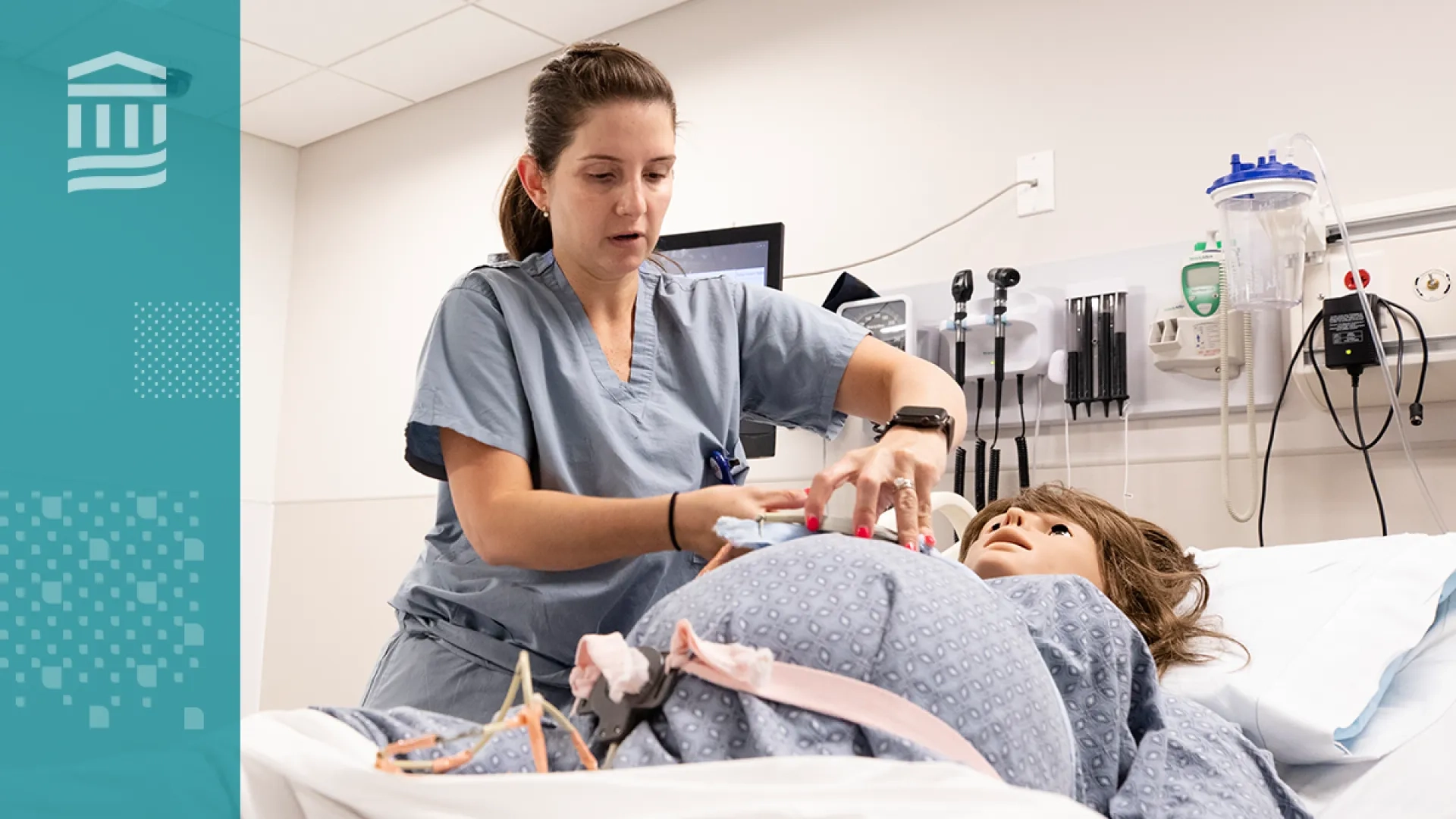
The University simulation lab mirrors a working hospital floor, with high-fidelity manikins that can breathe, bleed, and deteriorate. Teams respond to unfolding scenarios and then debrief together on what worked.
Clinical Rotations
Clinicals are where the rest of it comes together. You rotate through units and care settings across the year, learning to exercise clinical judgment with a real patient in front of you. The program closes with 180 hours paired one-on-one with a practicing nurse.
Is the Fastest Pathway the Right Pathway?
The Case For It
You reach licensure in a year rather than four, and you skip general education requirements you already completed. Entering the workforce sooner means less lost income and a faster return on tuition.
The Case Against It
Students are in class or clinical five to six days a week, on schedules that can fall anywhere across a 24-hour period. Our student success counselors strongly recommend against holding a job during the full-time program.
If you are managing caregiving responsibilities or cannot pause your income, the 24-month part-time option may serve you better. Choosing the slower path is not a failure of ambition. It is planning.
How to Choose a Nursing Program
- Accreditation: Look for programs accredited by the Commission on Collegiate Nursing Education (CCNE) or the Accreditation Commission for Education in Nursing (ACEN).
- Format: Some nursing programs offer online, in-person, or hybrid coursework. Online nursing programs can deliver lectures remotely, but clinical hours are always completed in person.
- Clinical placements: Ask where students actually rotate and how placements are assigned.
- Support systems: Ask about faculty ratios, academic support coaching, and tutoring. In an accelerated format, support is not a perk.
Preparing for an Accelerated BSN Program
Financial Planning
Treat the program like a full-time job you are paying for, and budget for tuition, living expenses, and lost income. Review financial aid options early, and ask about scholarships and tuition reductions for Mass General Brigham employees, clinical affiliate staff, and alumni.
Time Management
Map a realistic weekly schedule before you start. Block study time, clinical hours, commuting, sleep, and one thing that is entirely yours.
Emotional Readiness
You will care for patients on the hardest days of their lives while still learning how. Line up your support network in advance, and find campus counseling before you need it.
Career Opportunities After Graduation
Employment Opportunities
Registered nurses work in hospitals, outpatient clinics, public health, home care, and specialties such as oncology, critical care, and pediatrics. BLS projects about 189,100 nursing job openings each year through 2034.
The national median wage for registered nurses was $93,600 in May 2024, according to BLS. Massachusetts ranks among the higher-paying states, and specialty certification, shift differentials, and advanced degrees push earnings higher.
Continued Education and Specialization
Your BSN degree is a foundation, not a ceiling. Many nurses earn certification in a specialty after a few years of practice, then move into graduate study.
A Master of Science prepares you for the nurse practitioner role, and a Doctor of Nursing Practice supports leadership and advanced clinical careers. BLS projects 35 percent growth for nurse practitioners, nurse midwives, and nurse anesthetists through 2034. Explore nursing career paths and opportunities to see where a nursing career can lead.
Related Articles
What Is an ABSN? Your Guide to Accelerated Nursing Programs
Fri, 09/18/2026
Celebrating Careers, Community, and Lasting Impact
Thu, 06/25/2026
ABSN Students Hold Health Fairs for Elementary School Kids
Thu, 06/25/2026