How to Choose the Right Occupational Therapy Program: 7 Factors to Compare


Maybe you watched an occupational therapist help your grandmother cook again after a stroke. Maybe you saw a child gain confidence through play-based therapy. Moments like these draw many people to occupational therapy. The next step is finding the right OT program to get you there.
With so many options, choosing an occupational therapist school can feel overwhelming. You may be weighing cost, location, and how to balance school with work or family. This guide breaks the decision into seven clear factors. Use it to compare every occupational therapy doctorate program on your list.
What Is an Occupational Therapy Doctorate?
Occupational therapists help people of all ages do the everyday activities that matter most to them; like dressing, working, learning, playing, and caring for others. The study of how these activities shape health is called occupational science. It's the foundation of every quality OT program.
You can enter the profession with a master's degree or a doctoral degree. A Master of Science in Occupational Therapy (MSOT) typically takes two to 2.5 years. An entry-level Doctor of Occupational Therapy (OTD) usually takes about three years. Both paths prepare you for national certification and state licensure.
An occupational therapy doctorate adds advanced coursework in research, leadership, advocacy, and program development. It also includes a doctoral capstone experience of at least 14 weeks. Graduates leave ready for clinical practice and for leadership roles that shape the field.
7 Factors to Consider When Choosing an OT Program
1. An Evidence-Based Curriculum
Picture a client recovering from a hand injury. Which treatment will help them return to work fastest? Evidence-based practice (EBP) helps you answer questions like this. It blends current research, clinical expertise, and each client's values and goals.
A strong OT program teaches you to find, judge, and apply research to real client care. These skills keep you current long after graduation.
What to look for:
- Coursework in EBP methods, critical thinking, and data analysis
- A foundation in health sciences such as anatomy, neuroscience, and kinesiology
- Opportunities to work on research projects with faculty
- Training in research literacy that supports lifelong learning
2. Interprofessional Education and Collaboration
Occupational therapists rarely work alone. You'll partner with physical therapists, nurses, speech-language pathologists, physicians, and teachers. Interprofessional education (IPE) teaches you how to thrive on that team.
In an IPE-focused program, you learn alongside students from other health professions. Together, you solve real cases the way care teams do every day. This prepares you to work effectively alongside other healthcare providers from your first day on the job.
Benefits of an interprofessional focus:
- A deeper understanding of holistic, client-centered care
- Stronger communication and teamwork skills
- A professional network that spans many health fields
- Confidence in fast-paced, multidisciplinary settings
At Mass General Brigham University of Health Professions, students learn in interprofessional teams through a university-wide curriculum.
Check out some interprofessional learning experiences from current OTD students on our MGBUOT Instagram Page!
3. Diverse Clinical and Fieldwork Experiences
Fieldwork is where classroom learning comes to life. Under the guidance of experienced practitioners, you apply your skills with real clients. Every accredited program includes fieldwork, but quality and variety differ widely between schools.
Key factors to compare:
- Range of settings: Hospitals, schools, mental health facilities, and community organizations
- Experienced supervisors: Mentors who offer regular feedback and help you grow as a clinician
- Progressive structure: Placements that move from observation to more independent, hands-on roles
At the university, the Entry-Level Doctor of Occupational Therapy program includes five part-time Level I fieldwork experiences. These take place during the first two years, alongside coursework. Students then complete two full-time, 12-week Level II placements. A required Advanced Doctoral Experience completes the program.
Placements span acute care, rehabilitation, pediatrics, geriatrics, schools, and community practice. Some students even learn in diverse settings abroad, like a recent trip to Ghana.
OT student Erin Macdevette, on their trip to Ghana: “This was a unique opportunity to learn more about what occupational therapy looks like abroad. The interprofessional aspect intrigued me because you not only see where we fit in and show the unique lens of occupational therapists, but you can educate some of our American colleagues.”
4. Hands-On Practice and Skills Development
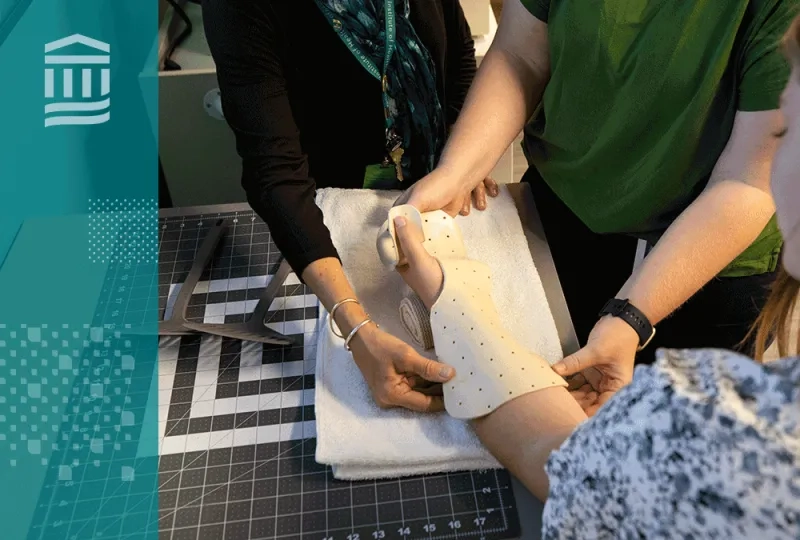
Occupational therapy is a hands-on profession. You'll learn best by doing, long before you meet your first client in the field. Look for an occupational therapist school that builds practice into every semester.
Hands-on learning opportunities to look for:
- Labs and simulation centers for practicing assessments and interventions safely
- Simulated learning with standardized patients, who are trained actors portraying clients
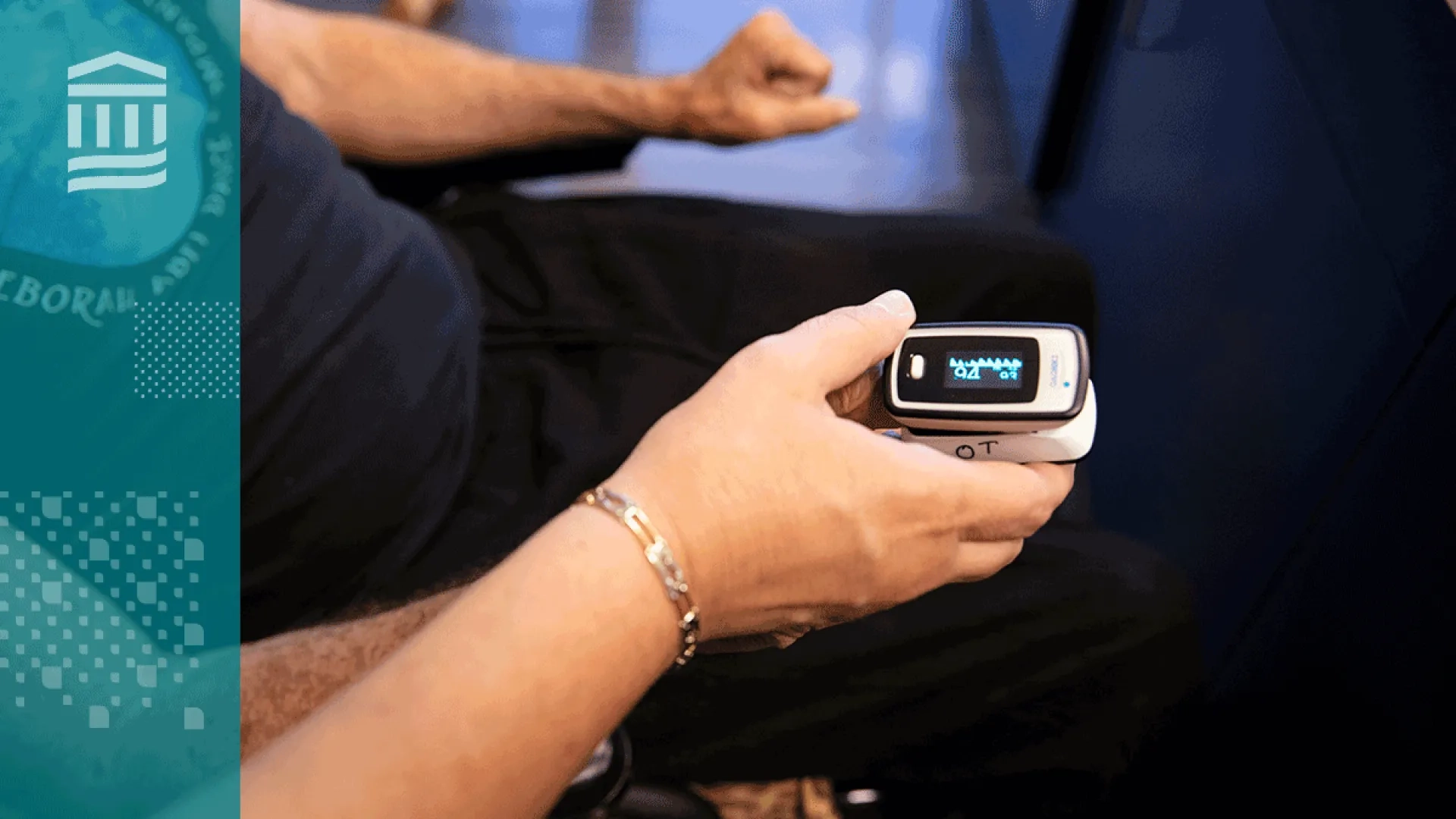
- Technology such as assistive devices, virtual reality, and wearable sensors
- Regular practicums that connect theory to practice throughout your coursework
For example, the Tabor/Connor Family Occupational Therapy Center is a functional living lab. It includes a kitchen, living room, bedroom, and bathroom. Here, students practice helping clients with daily tasks in a realistic home setting.
Standardized patients and adults from the local community also take part throughout the curriculum. These encounters help you practice communication, assessment, and clinical reasoning before fieldwork begins.
5. Affiliation With a Large Hospital System
A strong connection to a major healthcare network can shape your entire education. Affiliated programs give students access to clinical resources, varied placements, and expert mentors. These relationships can also open doors when you start your job search.
Advantages of a hospital system affiliation:
- Clinical placements across many specialties and settings
- Faculty and mentors who practice in leading hospitals
- Networking with healthcare professionals before graduation
- Job placement support after you earn your degree
The university is part of Mass General Brigham. This gives students access to practitioners who serve as faculty and mentors. The Entry-Level OTD program reports a 100 percent employment rate for its graduates.
6. Faculty Expertise and Mentorship
Your professors will shape how you think, practice, and grow. Great faculty bring real clinical experience into the classroom. They also make time to mentor you through challenges.
What to look for in faculty:
- Clinical expertise in areas that interest you, such as pediatrics or neurorehabilitation
- Active research that keeps teaching current
- Experience in interprofessional practice
- Support for students balancing work, family, or a career change
Take time to review the program's faculty and their areas of expertise. If you can, ask current students how faculty support them.
7. Accreditation and Program Outcomes
Accreditation belongs at the top of your checklist. The Accreditation Council for Occupational Therapy Education (ACOTE) accredits OT programs in the United States. ACOTE is part of the American Occupational Therapy Association (AOTA). You must graduate from an accredited program to take the national certification exam.
The National Board for Certification in Occupational Therapy (NBCOT) administers that exam. Passing it earns you the Occupational Therapist, Registered (OTR) credential. State licensure boards also require a passing score, along with their own requirements.
Key outcomes to compare:
- NBCOT exam pass rates
- Graduation rates
- Employment rates after graduation
- National rankings and reputation
The university's Entry-Level OTD program is accredited by ACOTE. It reports a 99 percent NBCOT pass rate and a 96 percent five-year graduation rate. The program is also tied for 15th nationally in U.S. News & World Report rankings. That places it in the top 5 percent of programs.
Find the OT Program That Fits Your Goals
Choosing an occupational therapy doctorate is one of the biggest decisions of your career. Use these seven factors as a checklist as you compare programs. Visit each occupational therapist school on your shortlist, talk to current students, and ask about outcomes. The right fit will prepare you to make a lasting difference in people's lives.