


The Future of AI in Healthcare Simulation Depends on Training and Trust
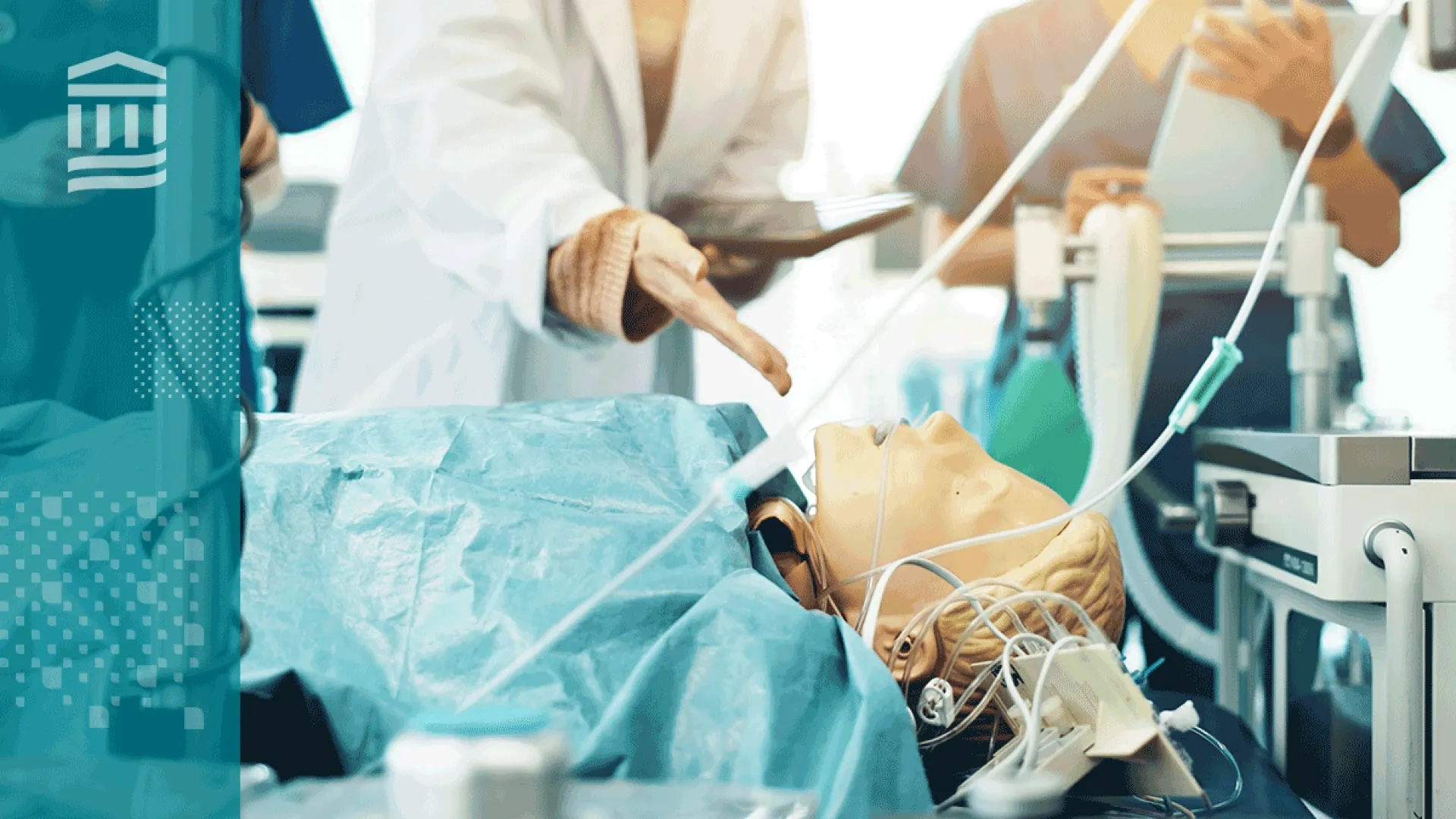


Healthcare simulation gives students and clinicians a safe place to practice before they care for real patients. Learners can respond to a clinical change, communicate with a patient, work through a team decision, or reflect after a difficult scenario.
AI in healthcare often suggests clinical decision support. But AI is also beginning to reshape simulation training in healthcare. It can help educators draft scenarios, create learning materials, support feedback and assessment, explore new ways to prepare students for complex clinical environments, and serve as simulators (e.g., virtual patients).
A survey led by Janice C. Palaganas, PhD, MSN, and colleagues offers a closer look at how AI is already used in healthcare simulation. AI adoption is growing, but the future depends on training, trust, and oversight.
AI Is Already Part of Simulation Training
The study surveyed 158 respondents from 12 countries who work in or around healthcare simulation. Nearly half, 49.4 percent, reported using AI in simulation activities at either the program, administrative, or personal level. Another 41.1 percent said they do not use AI, and 9.5 percent were unsure.
Interest among non-users was high. Of those who did not use AI and responded to the question, 95.9 percent said they wanted to learn more. Among those already using AI, 71.2 percent reported plans for future use.
These findings suggest that artificial intelligence in education is no longer a distant concept for simulation professionals. Many educators have started to experiment. Many others are ready to learn, but need direction.
How Educators Use AI Tools for Education
The survey found that large language models, such as ChatGPT, were the most common AI modality used in simulation. Respondents also reported using image generation, presentation tools, AI-powered virtual or augmented reality, and intelligent tutoring systems.
Much of the current use appears practical. Educators use AI tools for education to support curriculum development, generate simulation scenarios, assist with feedback and assessment, and support research and analysis. AI often helps with the work around simulation, not only the simulation encounter itself.
A faculty member might use AI to help draft a case about a patient with multiple chronic conditions. A simulation team might use AI to brainstorm communication challenges for an interprofessional scenario. Used well, these tools can save time and expand creative options. Used poorly, they can introduce errors, bias, or privacy risks.
Why Training Matters
The study identified improved efficiency and enhanced learning outcomes as major reasons simulation professionals adopt AI. Among AI users, 68 percent said AI had changed the way they work. Many reported that it saved them one to four hours per week.
But the study also found a clear training gap. Most respondents described their AI knowledge as limited or moderate. Sixty-three percent reported no AI training at all. Among those who had received training, most relied on self-training or informal guidance from experts.
That creates a practical challenge. Simulation training in healthcare depends on careful design, clear learning objectives, skilled facilitation, and meaningful debriefing. AI can support those elements, but it cannot replace the educator’s judgment. Faculty and staff need to know how to evaluate AI-generated content, check for clinical accuracy, protect information, and decide when AI adds value.
Respondents wanted workshops, certifications, and access to technical experts. They also expressed interest in AI-enhanced scenario generation, automated performance assessment, realistic virtual patients, and personalized learning paths.
Trust Requires Governance
The future of AI in healthcare simulation also depends on trust. Respondents raised concerns about privacy, bias, fairness, transparency, accountability, and autonomous decision-making. Yet only about one-quarter reported using policies that govern AI in simulation.
Simulation programs need clear expectations for when AI can be used, what information can be entered into AI systems, how outputs should be reviewed, and who remains accountable for final educational decisions. Good governance helps educators use AI responsibly and gives learners confidence that AI-supported experiences remain accurate, fair, and aligned with educational goals.
What This Means for Health Professions Education
For institutions such as Mass General Brigham University, the study points to an important next step. AI can help advance simulation training in healthcare, but only when educators have the preparation, support, and policies to use it well.
The strongest future for artificial intelligence in education will keep people at the center. AI may help build a scenario, organize feedback, or create new opportunities for practice. Educators still guide the learning. They ask deeper questions, lead the debrief, notice what learners need, and connect simulation to patient-centered care.
The study’s outcome is not simply that AI use is growing. It is that growth now requires structure. Training builds skill. Governance builds trust. Together, they can help simulation programs use AI in ways that strengthen healthcare education while protecting the human judgment that makes simulation meaningful.
About the MGBU Authors
Janice C. Palaganas, PhD, MSN, is affiliated with the REBEL Lab and the Center of Excellence in Healthcare Simulation Research at Mass General Brigham University. Her work focuses on healthcare simulation and innovation in clinical learning. She worked alongside Maria Bajwa, PhD, MBBS, MSMS, CHSE, an Associate Professor at the University, where she specializes in healthcare simulation and the ethical integration of artificial intelligence (AI) in health professions education, and Nicole Danaher-Garcia, PhD, an assistant professor who teaches quantitative analysis and predictive analytics course in the Master/PhD of Health Professions Education.
Citation