

Addressing the Nurse Educator Shortage: A Shared Responsibility
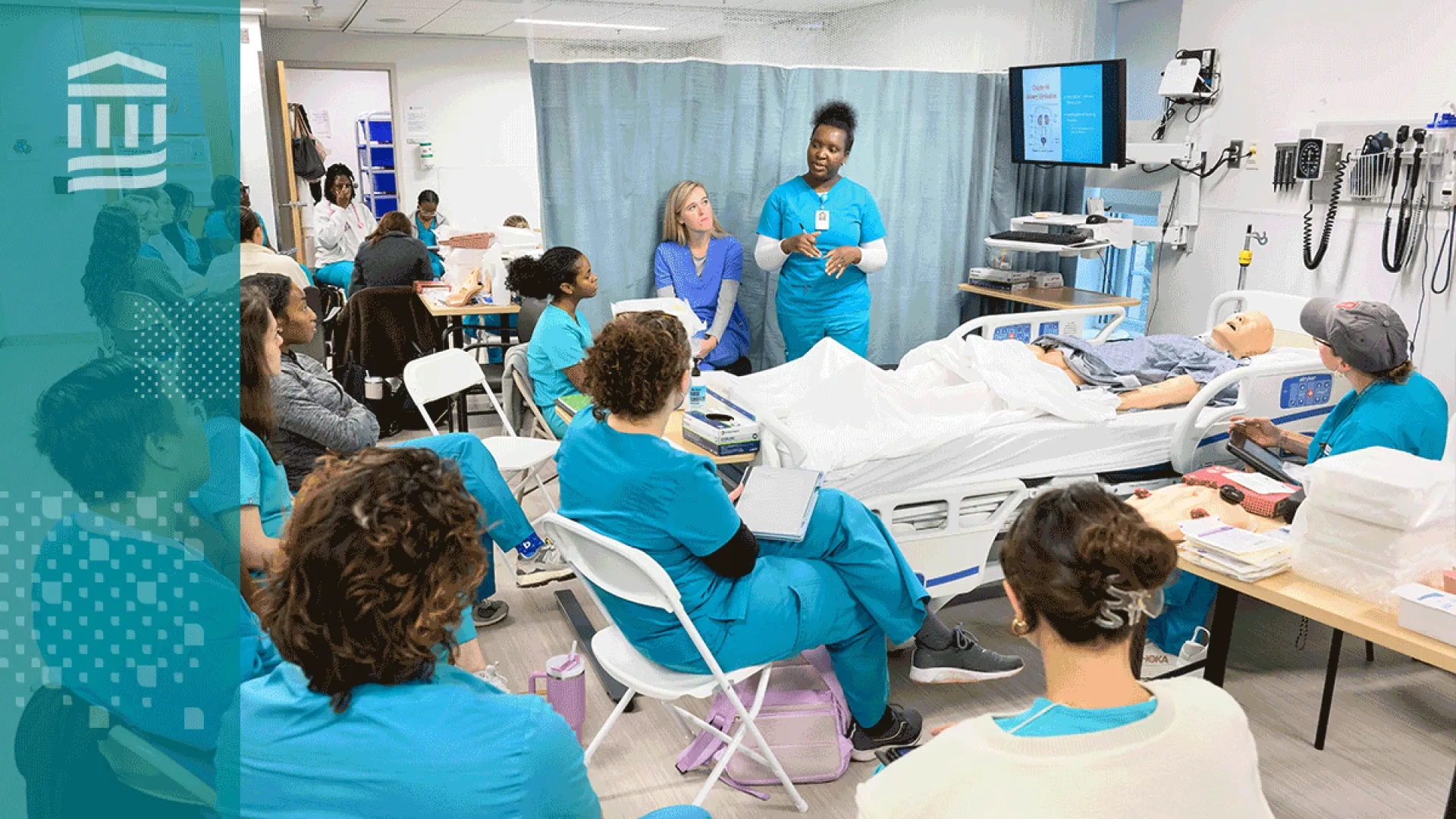


Every nurse begins with a teacher.
Before nursing students care for patients, enter clinical settings, or join the healthcare workforce, they learn from nurse educators who help them connect knowledge, judgment, and practice. That makes the shortage of academic nurse educators more than a staffing issue for colleges and universities. It is a pressure point for nursing education, healthcare professionals, and the patients they serve.
A multiyear national research initiative examined why this shortage persists and what different stakeholders can do about it. This collaborative effort also led to the establishment of the National Consortium of Academic Nurse Educators (NC-ANE). The issue is significant. In 2024, nearly 67,000 qualified applications to nursing programs were turned away, with insufficient faculty among the contributing factors (AACN, 2025, as cited in Bajwa et al., 2025).
The research, resulting in six publications between 2023 and 2025, points to the need for coordinated action across education, healthcare, policy, professional nursing organizations, and the public and business sectors.
Understanding the Shortage and Identifying Solutions
The researchers used a structured qualitative method called nominal group technique, which helps participants generate ideas, prioritize themes, and reach consensus. The project began with 45 nurse educators from across the United States and continued with 25 active participants who worked through the study process.
Building on the findings from the five stakeholder-focused investigations, a subsequent Delphi study engaged 646 participants in the first round and 272 in the second, resulting in 36 consensus-based action statements. Three central areas emerged: collaboration across stakeholder groups, compensation and benefits, and specialized educational preparation for nurse educators (Bajwa et al., 2025).
Educational Institutions: Recruitment and Retention
Educational institutions need to support the nurse educators they already have. That means recognizing academic nursing education as a specialized role, valuing credentials in nursing education, and creating promotion pathways that reflect the work faculty do.
Compensation also matters. The research identifies salary differences between clinical practice and academia as a major barrier.
Mentorship is another practical step. New faculty often need help with course design, student evaluation, academic policies, and the culture of higher education. Formal onboarding, co-teaching, and structured mentoring can help nurse educators build confidence and remain in their roles.
The research also emphasizes the need to build a stronger pipeline into academic nursing roles. Current faculty can help nursing students see education as a viable career path by inviting them into teaching-related experiences. These may include tutoring, mentoring, peer review, discussion facilitation, or teaching assistant roles.
For graduate students and practicing nurses, certificate programs, tuition support, and clearer funding pathways can make the transition into academia more realistic.
Healthcare Organizations: Bridging Practice and Education
Healthcare organizations have an important role in developing the next generation of nurse educators. Partnerships with educational institutions can create joint academic and clinical appointments, mentorship opportunities, shared simulation resources, and more effective clinical placements.
Flexible staffing arrangements and financial support can also help practicing nurses pursue advanced educational qualifications while maintaining their clinical roles.
Professional Nursing Organizations: Recognition and Advocacy
Professional nursing organizations are well positioned to advocate for academic nursing education as a specialized professional role. Through coordinated efforts, they can promote appropriate educational preparation, clearer professional expectations, improved compensation, and greater recognition of the expertise required to teach future nurses.
Policymakers: Creating Sustainable Solutions
Addressing the shortage also requires financial and structural support at state and national levels. The research highlights opportunities to expand funding for nurse educator salaries, loan repayment programs, specialized educational preparation, and academic-clinical partnerships. Such investments can help reduce barriers to entering and remaining in academic nursing education.
Public and Business Sectors: Advocacy Beyond Healthcare
Patients, families, communities, and businesses all depend on a sustainable nursing workforce. Yet the connection between the shortage of nurse educators and access to healthcare may not be widely understood.
Public awareness campaigns, patient experiences, legislative advocacy, and partnerships with businesses can broaden support for nursing education and encourage investment in the future healthcare workforce
Why This Matters for the Future Workforce
The shortage of nurse educators affects far more than faculty offices. When schools lack enough qualified faculty, they may have to limit enrollment, even when qualified applicants want to become nurses. That creates consequences for nursing education and for healthcare organizations that depend on a steady workforce.
The research does not present a single quick fix. Instead, it offers a consensus-based roadmap. Its central message is that no single stakeholder group can address the shortage alone.
For nursing education to meet the needs of students, healthcare professionals, and communities, society as a whole must recognize the value of and need to invest in the people who teach. More nurse educators can mean more opportunity for nursing students, stronger learning environments, and a more stable path toward addressing the nursing workforce shortage.
About University Author
Maria Bajwa, PhD, MBBS, MSMS, CHSE, associate professor at Mass General Brigham University, was a co-author of all six publications and first author of the culminating Delphi study. A physician by training and a health professions educator, Bajwa became involved in this research recognizing the nurse educator shortage as a shared healthcare challenge. She is a founding member of NC-ANE, a nonprofit organization that emerged from this collaborative initiative and is dedicated to advancing and supporting academic nurse educators. She continues to serve on its Bylaws Committee.
She specializes in healthcare simulation and the ethical integration of artificial intelligence (AI) in health professions education. Her commitment to interprofessional faculty development extends to AI education, with training provided across nursing and medical education programs since late 2023. She serves as Lead AI Researcher for the REBEL Lab and founded the AI Assurance Lab, which advances responsible evaluation and deployment of AI in simulation and health professions education. Learn more about Bajwa’s work in AI and healthcare simulation in the university’s March 2026 faculty spotlight, Advancing Educators Through AI: A Conversation with Dr. Maria Bajwa.
Research Publications
Bajwa, M., Davis, S. P., Esposito Kubanick, V. A., Vardaman, S. A., Dowling-Castronovo, A., Carmody, C., Wall, C. L., Logan, L., Pajarillo, E. J. Y., & Seibold-Simpson, S. M. (2025). Use of research evidence and anecdotal experiences in addressing the shortage of academic nurse educators. Journal of Professional Nursing, 61, 105–115. https://doi.org/10.1016/j.profnurs.2025.08.005
Brown, F., Pajarillo, E. J. Y., Baker, J., Kabigting, E.-N. R., Bajwa, M., Dowling-Castronovo, A., Kaufman, D., Santee, R., Seibold-Simpson, S. M., & Lee, J. L. (2025). Addressing the shortage of academic nurse educators: An opportunity for collaboration between academic and healthcare organization leaders. The Journal of Nursing Administration, 55(2), 76–82. https://doi.org/10.1097/NNA.0000000000001534
Lee, J. L., Logan, L., Pajarillo, E. J. Y., Esposito Kubanick, V. A., Brown, F., Jr., Kabigting, E.-N. R., Santee, R., Doria, J. B., Seibold-Simpson, S., & Bajwa, M. (2024). Addressing the shortage of academic nurse educators: Enlisting public and business sectors as advocates. OJIN: The Online Journal of Issues in Nursing, 29(2), Manuscript 2. https://doi.org/10.3912/OJIN.Vol29No02Man02
Quay, C., Kabigting, E.-N. R., Wall, C. L., Farrell, R., Suzan, Z., Washington, S., Pajarillo, E. J. Y., Seibold-Simpson, S. M., & Bajwa, M. (2023). The academic nurse educator shortage: A qualitative study and a call for collaboration with professional nursing organizations. Journal of the American Nurses Association–New York, 3(1), 55–62. https://doi.org/10.47988/janany.44233655.3.1
Vardaman, S. A., Holt, T., Kabigting, E.-N. R., Miller, K. S., Pajarillo, E. J. Y., Bajwa, M., Lee, J. L., & Seibold-Simpson, S. M. (2025). Policy recommendations to address the nurse educator shortage: Nominal group technique findings. Journal of Nursing Education, 64(7), 415–422. https://doi.org/10.3928/01484834-20250221-01
Vardaman, S. A., Logan, L., Davis, S. P., Sciarra, E., Doria, J. B., Baker, J., Feeney, S., Pajarillo, E. J. Y., Seibold-Simpson, S., & Bajwa, M. (2024). Addressing the shortage of academic nurse educators: Recommendations for educational institutions based on nominal group technique research. Nursing Education Perspectives, 45(4), 201–207. https://doi.org/10.1097/01.NEP.0000000000001264