


Student Story
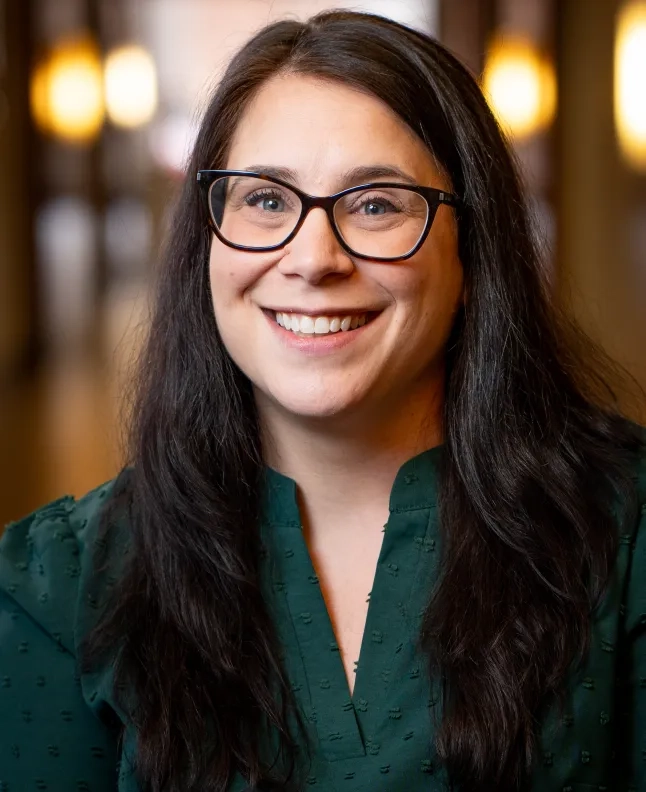
Vanessa Dellheim
DPT ’11, Current Master of Health Administration Student
Career: Senior HRO Project Manager
Mass General Brigham


What was the catalyst for you pursuing an additional degree?
For 18 years, I worked as a physical therapist and found that some of the most rewarding aspects of my career were mentoring others, promoting evidence-based practice, and improving the quality of care we provided. Recently, I transitioned careers into healthcare quality and process improvement. This gave me the opportunity to see healthcare through a different lens. I began to understand how many different people, processes, and organizational decisions must come together to deliver high-quality care. That broader perspective sparked my interest to learn more about healthcare leadership and administration and ultimately led me to pursue my Master in Health Administration degree.
What has been the most positive aspect of returning to your alma mater?
My positive experience completing my transitional Doctor of Physical Therapy gave me confidence in the MGH Institute's [Mass General Brigham University’s] commitment to its students.
What do you think you bring with you from your first degree into your current program?
My clinical background has provided me with invaluable insight into the day-to-day realities of healthcare delivery. As a physical therapist, I experienced firsthand how organizational decisions, processes, and improvement initiatives ultimately impact both frontline staff and patients. As I pursue my Master of Health Administration, I will continue to keep the patients as well as the provider perspective at the forefront of my approach to decision-making and implementation. I strongly believe that frontline staff are invaluable resources in identifying opportunities for improvement and developing solutions that are both meaningful and sustainable.
What do you hope to achieve by obtaining this degree?
Through my Master of Health Administration, I hope to better understand how effective leadership can influence change within an evolving healthcare system. Having spent much of my career as a frontline clinician and now working in quality and process improvement, I have seen how important strong systems are to supporting both staff and patients. I hope this degree will provide me with the knowledge and skills to help create, implement, and sustain improvements that support healthcare teams and ultimately lead to better patient outcomes.
How did the university prepare you for your current role or influence your career trajectory and professional growth?
The university has played an important role in my professional growth at different stages of my career. After completing my transitional Doctor of Physical Therapy, I continued to build my career as a physical therapist, ultimately spending 18 years in clinical practice at Massachusetts General Hospital. That clinical experience gave me a strong foundation in patient care, evidence-based practice, mentoring, education, presenting, and the importance of engaging frontline staff in improving care. More recently, my career has shifted from direct clinical practice to a role focused on healthcare quality and process improvement. This transition has broadened my perspective from caring for individual patients to understanding the larger systems, processes, and leadership decisions that influence both staff and patient outcomes. Pursuing my Master of Health Administration at the MGH Institute [Mass General Brigham University] is helping me build on my clinical experience and develop a deeper understanding of healthcare leadership, administration, and sustainable systems improvement. Ultimately, the university has supported my evolution from frontline clinician to healthcare quality professional, while allowing me to carry my clinical perspective into this new career path. My goal is to use both experiences to help develop and implement sustainable improvements that support frontline staff, strengthen healthcare programs, and ultimately improve patient outcomes.
What advice do you have for other alumni who are thinking of furthering their education at the university?
I was initially on the fence about applying to the master’s program, so my first step was simply reaching out to learn more about the process. I was fortunate to speak with someone at the university who was very honest and transparent about the time commitment, coursework, and expectations of the program. That conversation helped me better understand what pursuing the degree would realistically look like and gave me the confidence to take the next step and apply.