


Student Story
Rachel Norton
MS-SLP '21, Current Rehabilitation PhD Student
Career: Speech-Language Pathologist, The COMPASS School (Dorchester, MA) & Technical Associate and fMRI operator, Gabrieli Lab at MIT’s McGovern Institute for Brain Research.
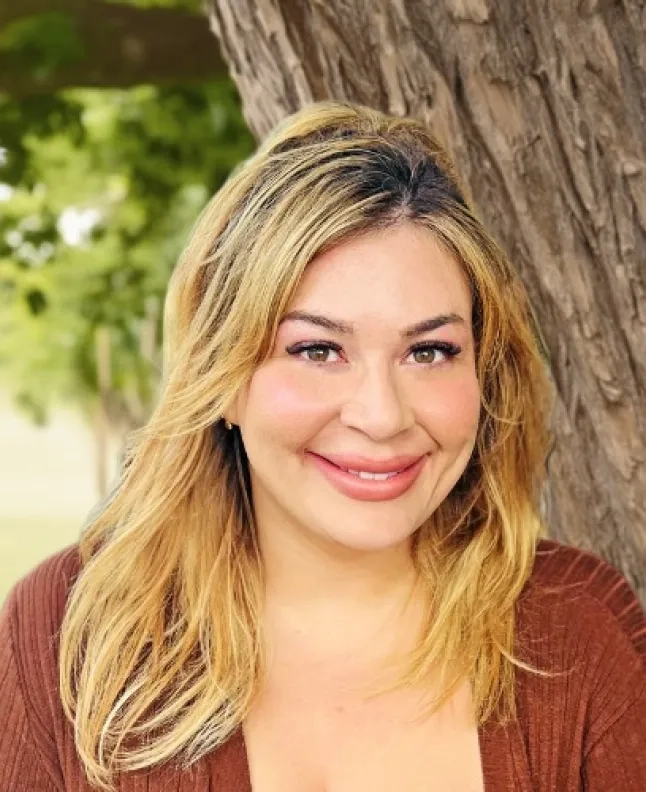


My undergraduate training in Family Science and Human Development taught me to see children in context: inside their families, communities, and schools. It also introduced me to early principles of trauma-informed care. I was drawn to SLP because it sat at the intersection of so much of what I cared about, including child development, language, cognition, and clinical work that changes a kid’s day-to-day life. It felt like one of the fields where I could merge all of those domains in practice.
At the IHP [MGBU], that interest sharpened into a specific commitment to literacy. Between my coursework, thesis research in the BEAM Lab, time as a Graduate Assistant in the library, and my work with The Dyslexia Foundation, I came to see reading as a whole-brain, whole-child skill, and to understand just how much we already know about how to teach it well. The gap between that science and who actually benefits from it has stayed with me ever since.
In practice, the picture has only gotten clearer. Working with students who are navigating both learning differences and trauma, I’ve seen how tightly literacy, stress, and long-term outcomes are tied together.
What were you doing before you came to school at the University?
I was an undergraduate at Montclair State University, where I earned my BA in Family Science and Human Development and graduated Summa Cum Laude in 2019. Alongside my coursework, I worked as an Asset Management Specialist in the university’s IT department and as a Research Assistant with Dr. Lyndal Khaw in the department of Family Science and Human Development. Those two roles gave me a foundation of technical fluency and hands-on research experience with vulnerable populations that still shapes how I work today.
How did MGBU shape your career?
The IHP [MGBU] taught me to think across disciplines and made clear that clinicians belong at the research table. My MS-SLP training was intentionally broad, with placements spanning Spaulding Rehabilitation Hospital’s TBI unit, school-based practice in Hanover Public Schools, and assistive technology services for children with autism and developmental language disorders. That range is the reason I can now hold a caseload of students who don’t fit neatly into any single lane.
In my current clinical role, nearly every student is navigating both learning differences and the effects of trauma, and the IHP’s [MGBU's] insistence on evidence-based, whole-person care is the framework I draw on every day. Through my work in the BEAM Lab and my work with The Dyslexia Foundation, I began to see literacy and neuroscience as a single research question rather than two adjacent ones. That’s the question I’m now pursuing as a doctoral student and as a Technical Associate in the Gabrieli Lab at MIT, where I contribute to the NIH-funded READ Study.
I’ve also been able to translate that work into free, open-source literacy tools I am building and using in practice, an example of the research-to-practice work the IHP trained me for.
Why did you return for another degree?
I came back for my PhD because I wanted a research program that would let me bridge clinical practice and science. The two roles inform each other in so many ways, and I didn't want to step away from either one to pursue the other. The Rehabilitation Sciences program is where I found those identities held together as a single professional path.
A big part of what drew me back was the chance to work with my mentor, Dr. Joanna Christodoulou, whose research on dyslexia and how learning differences show up in the developing brain has shaped how an entire generation of clinician-scientists thinks about reading. Being able to learn from her directly, and to build a dissertation inside that line of inquiry, was reason enough on its own.
Beyond that, I was excited to go deeper into statistics and quantitative methods, tap into the full range of research resources the IHP [MGBU] offers doctoral students, and learn from faculty who train clinician-scientists across disciplines. I was also looking forward to growing as an educator and developing my own pedagogy, since teaching the next generation of SLPs is a way to carry my work forward and advocate for this area of research.