


Student Story
Nashifa Momin
SLPD ’24, MS-SLP ’13
Career: Speech-Language Pathologist, Clinical Specialist, and Allied Health Scientist
Children's Healthcare of Atlanta
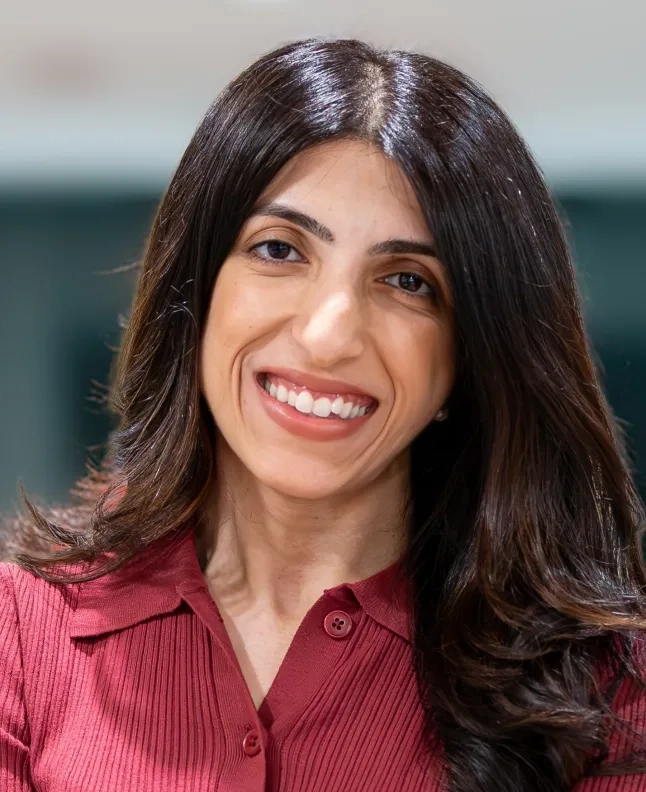


Which academic program did you complete most recently?
Doctor of Speech-Language Pathology
What was the catalyst for you pursuing an additional degree?
I had been a pediatric speech-language pathologist since 2013 and reached Level 3, the highest clinical level at my hospital, at 34. I was at a fork in the road: Move into a supervisory role or stay clinical and find a way to do more. Working with infants with congenital heart disease, I kept running into questions at the bedside that the evidence hadn’t answered yet. I wanted the skills to answer those questions myself and to turn them into changes that would help families beyond my own caseload. The Doctor of Speech-Language Pathology program let me do that without stepping away from patient care.
What was the most positive aspect of returning to your alma mater?
It felt like coming home. I already knew the culture and the level of support I could expect, and the faculty treated me as a colleague from day one. The program was built for working clinicians, so I could keep my full clinical role while applying what I learned in real time. My cohort became a true professional community, and many of them are still people I call when I need a sounding board.
What do you think you brought with you from your first degree into your second or subsequent programs?
My master’s program taught me to think like a clinician: to observe closely, ask why, and look at the evidence before making a decision. I carried that mindset into 10 years of pediatric practice, and by the time I returned for my Doctor of Speech-Language Pathology, I had a long list of questions from the bedside that I was ready to tackle.
Which class or learning experience was most impactful for you? Why?
My capstone, mentored by Dr. Meg Simione. It was a project on feeding and caregiver impact for infants with single ventricle congenital heart disease during the interstage period. It taught me how to move from an idea to a measurable change in a real system, including the parts that don’t go as planned. The project helped launch my hospital’s interstage multidisciplinary clinic in April 2024 and was published in Cardiology in the Young in 2025.
How did the University prepare you for your current role or influence your career trajectory and professional growth?
The Doctor of Speech-Language Pathology program opened a new career pathway for me. I now work as both the lead cardiac speech-language pathologist in the CICU/CACU at Children’s Healthcare of Atlanta and as an allied health scientist in our Nursing and Allied Health Research/EBP Department, where I help allied health professional colleagues design evidence-based practices, quality improvements, and research projects. The degree gave me confidence and the language to lead change, not just to identify where it’s needed.
What advice do you have for other alumni who are thinking of furthering their education at the University?
Bring a real question from your own practice. The program is most powerful when your coursework and your daily work feed each other. Lean on your cohort and faculty; they become your people, long after graduation. And don’t wait until you feel “ready.” Every project I’m proud of started with one small yes!