


Student Story
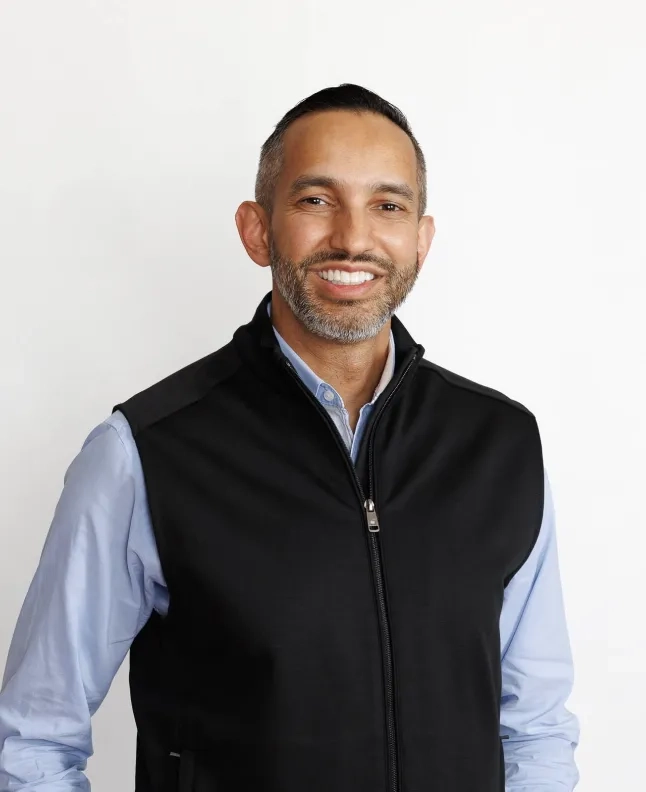
Farrukh Jafri
PhD-HPEd ’26, MS-HPEd ’19
Career: Medical Director, Emergency Medicine
White Plains Hospital


What was the catalyst for you pursuing an additional degree?
The Master of Science in Health Professions Education program gave me a language for what I was already doing as an educator and simulation researcher. Over time, though, my questions changed. I was building programs at White Plains Hospital, including in situ simulation in the emergency department during COVID and later a transitional care program, and I kept running into the same problem: The training was good, but it didn’t always change what happened to patients. I wanted research training to study that gap rigorously, to understand how education and simulation can be built into quality improvement, so they lead to measurable outcomes. The PhD program was the right place to do that, and coming back to a community that already knew me made the decision easy.
What was the most positive aspect of returning to your alma mater?
The people. I came back to faculty who already knew my work and pushed me to take it further, and my dissertation committee (Dr. Roger Edwards, Dr. Suzie Kardong-Edgren, and Dr. Anshul Kumar) were generous with their time and honest with their feedback. I also got to learn alongside classmates from nursing, rehabilitation, and other professions who were balancing graduate work with demanding clinical roles, just as I was. That interprofessional perspective shaped how I lead my own interdisciplinary team today.
What do you think you brought with you from your first degree into your second or subsequent programs?
The Master of Science in Health Professions Education gave me grounding in learning theory, curriculum design, and educational scholarship, so I started the PhD already thinking like an educator. I also brought a network of colleagues and mentors from the master’s program, and a habit of asking not only “Did people learn?” but “Did anything change because they learned?” That question became the center of my dissertation.
Which class or learning experience was most impactful for you? Why?
The dissertation itself. It let me connect years of work into one argument: Simulation is most valuable when it is embedded in quality improvement rather than treated as a standalone educational event. The work traced a path from in situ emergency department simulation during COVID to AI-powered patient simulation for telehealth nurses, and finally to real-time AI coaching on live calls with patients after discharge. Having a committee that challenged me at every step turned a collection of projects into a coherent body of research.
How did the University prepare you for your current role or influence your career trajectory and professional growth?
The PhD directly shaped the work I lead today. As medical director of WPH Cares, a 22-person transitional care and population health program at White Plains Hospital, I used my dissertation framework to design and evaluate AI-enabled training and coaching for our telehealth team. That work has been published in Simulation in Healthcare and has led to invitations to present at Google and NewYork-Presbyterian. It also prepared me for my role on the hospital’s AI steering committee, where I help evaluate and implement AI tools, and as an associate editor at Simulation in Healthcare. Most meaningfully, I’ve come full circle: I now serve as an adjunct professor at the University, developing and leading the AI curriculum on biodesign and implementation for the PhD in Health Professions Education program. Being able to give back to the program that trained me has been the most rewarding outcome of all.
What advice do you have for other alumni who are thinking of furthering their education at the University?
Come back with a real problem from your own work. The program is at its best when you bring questions you care about and let the faculty help you sharpen them. Lean on your classmates too, because they come from every corner of healthcare and you will learn as much from them as from coursework. And don’t wait until life is less busy. It rarely gets less busy, and the community here understands how to support people doing this alongside full careers.