Built for the Future. Together.
Renaming to Mass General Brigham University of Health Professions reflects “defining moment” in University’s growth within system and in its ambition for what health professions education can be
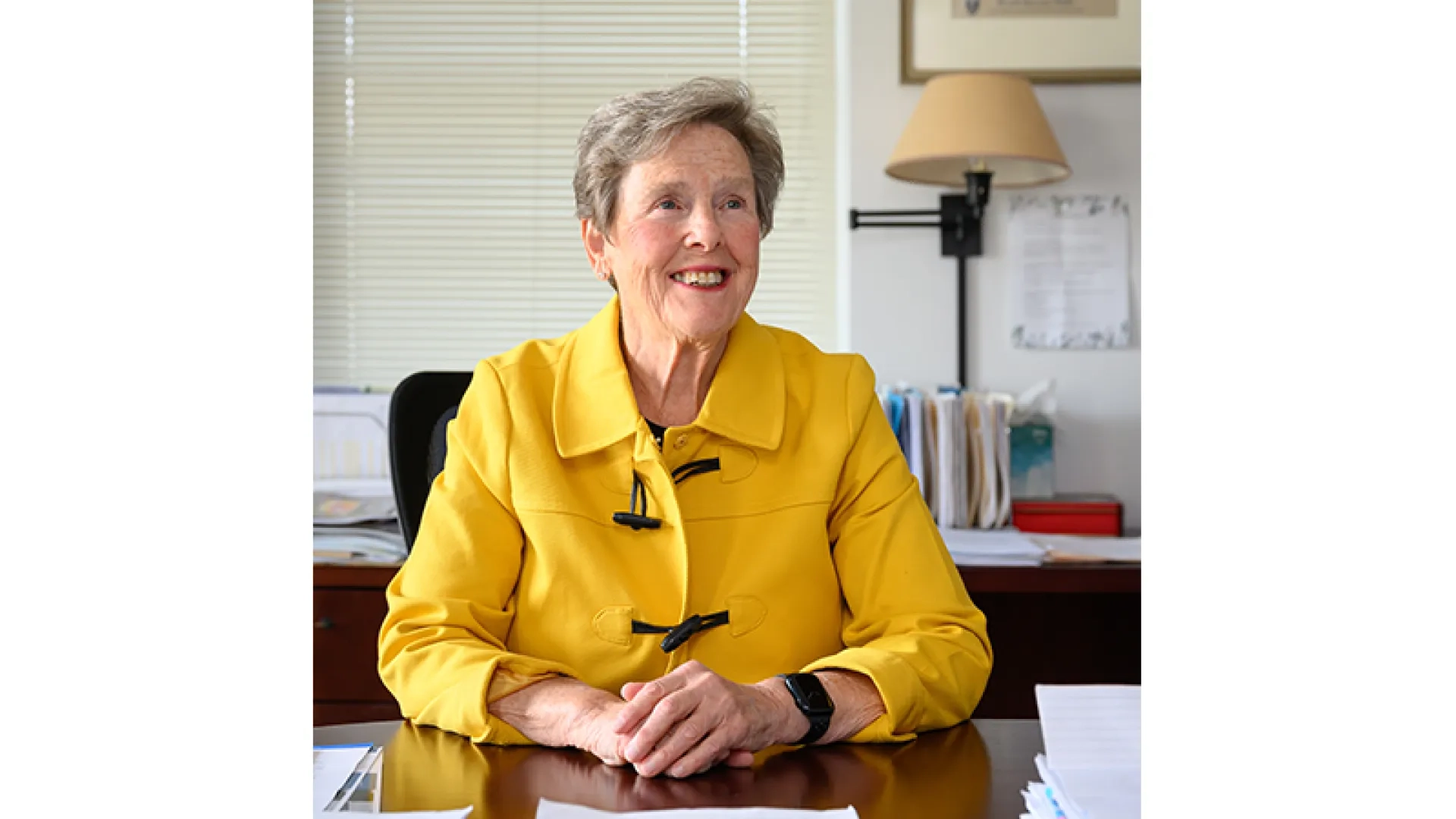
When Deborah Jones learned that MGH Institute of Health Professions was looking for a new president, she was chief integration officer, senior vice president & School of Nursing dean for The University of Texas Medical Branch. As she began the interview process, she heard the graduate school was in the process of changing the name it has had since it was founded nearly 50 years ago.
This piqued her interest even more.
“For me, it represented a moment of possibility, an opportunity to build on the Institute’s foundation and help shape what this next chapter could mean for the school, the health system, and the communities we serve,” said Jones, who began her tenure as the school’s seventh president in January 2026. “I saw it not simply as a change in branding but as a signal of institutional ambition and strategic alignment. A new name gives our identity greater clarity, visibility, and momentum.
“That is what drew me here: the opportunity to help build a university that prepares the healthcare workforce of the future and translates knowledge into better care.”
The new name, Mass General Brigham University of Health Professions, harkens back to the vision of the school’s founders while setting forth a new and bold future. In the 1970s, as Massachusetts General Hospital worked toward creating a groundbreaking graduate school, having MGH in the name was an easy call. Hospital leaders internally paired that with “university” but ultimately thought “Institute,” defined as a school that focuses deeply on a single subject area—in this case, health professions education—was a better fit, according to Julian Haynes, the school’s first provost (as its leaders were called at that time).
But after rapid growth over the past decade and a half, the school became positioned to take full advantage of being the only degree-granting affiliate of Mass General Brigham, a world-class healthcare system. It became clear to school officials that a name change would be needed to accomplish that.
Timing Is Everything
For decades, it seemed that with the arrival of new members to the Board of Trustees came the question of why the school was called an “Institute.” Why not a college, or even a university, people would ask. Most people thought of a think tank or equated the word with engineering schools like Massachusetts Institute of Technology or Worcester Polytechnic Institute.
The answer was complicated, but came down to this: The school did not yet offer the multiple bachelor’s degree programs the Massachusetts Board of Higher Education required to consider a university designation.
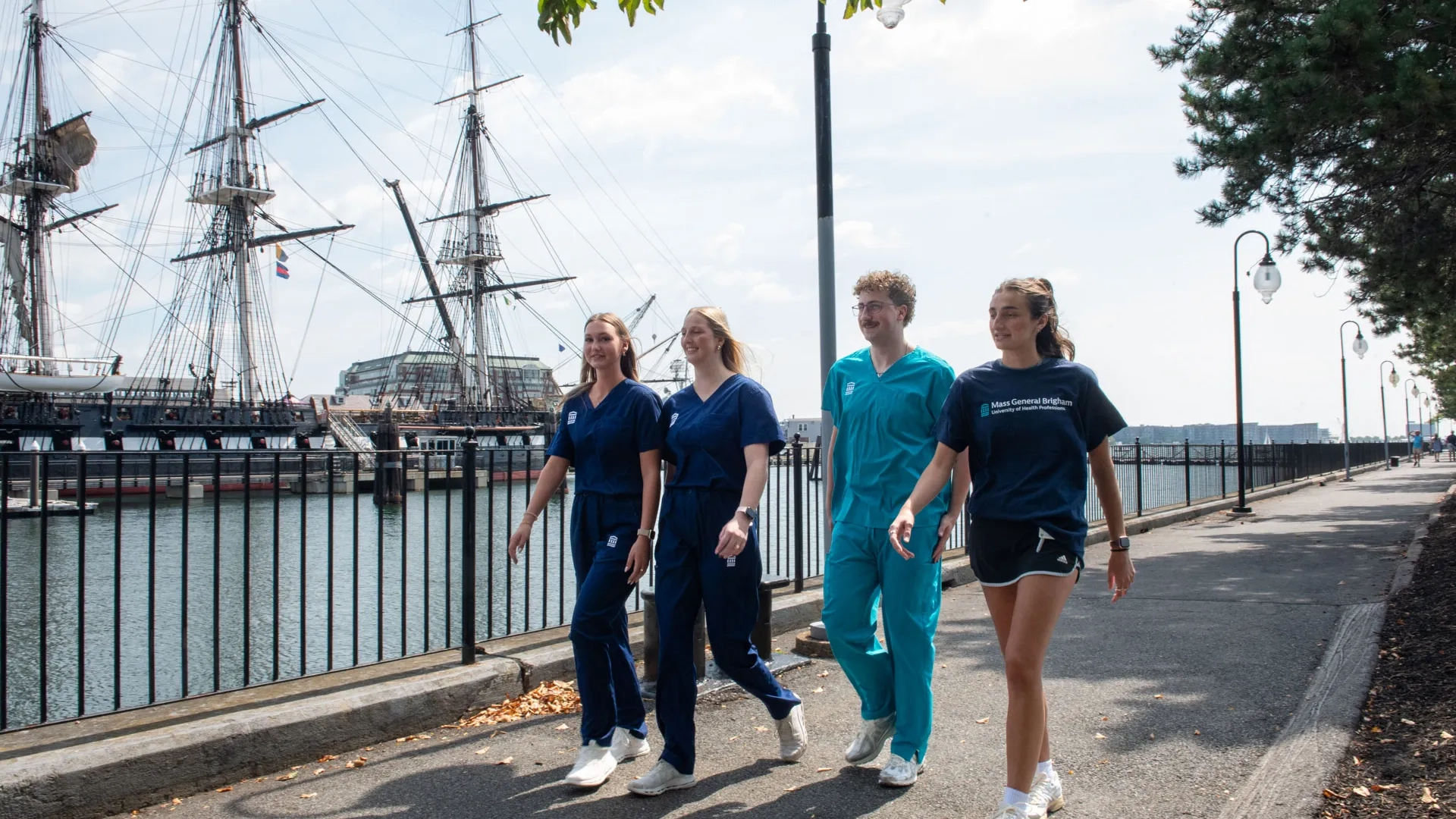
Despite the questions about the name, the school flourished over the decades, accelerating over the past 15 years as it doubled the number of students, added multiple degrees and certificates, built an impressive research portfolio, and grew from one building in the Charlestown Navy Yard into a campus that now incorporates six buildings. Today the University enrolls 1,894 students from 44 states and 17 countries across 35 degree and certificate programs and counts more than 12,000 alumni.
In 2019, the Partners HealthCare system rebranded as Mass General Brigham. It was two years after Paula Milone-Nuzzo had become president, and not only had she heard the questions about the school’s name, but she had those same questions herself. In 2024, after the challenges of and recovery from the COVID-19 pandemic, she revisited the idea and began speaking to Mass General Brigham executives.
By then, the Institute was the lone Mass General Brigham entity that had not rebranded, and Milone-Nuzzo began hearing from system executives that there was a desire to have every entity included under the brand.
“We wanted to be able to capitalize on the Mass General Brigham name recognition, and we wanted to be in control of what the IHP would be called,” she said. “Since the IHP was an integral part of the system, it was important that we shared that branding. So it was the perfect time to consider a name change.”
According to Jeanette Ives Erickson, the school’s board chair, and Jim Canfield, board vice-chair, the board discussed whether to keep “MGH,” “Institute,” both, or neither in the new name. In the end, they concluded a sweeping change was the way to go.
Milone-Nuzzo and the Institute’s board relied on an assessment initiative to determine what the school’s stakeholders thought about making the change. Focus groups with alumni, faculty, students, and Institute stakeholders and interviews with Mass General Brigham leaders sought to identify what name would best position the school for the future. After seeing the results, they decided Mass General Brigham University of Health Professions was the optimal path forward.
“Calling the IHP a university would eliminate the confusion of whether it was an institute of higher education, and changing from MGH to Mass General Brigham provided clarity about our role within the context of the larger system, and not just an association with Mass General Hospital,” Milone-Nuzzo explained.
Despite those advantages, Milone-Nuzzo knew there would be some attachment to a name that had been in place for nearly 50 years. Alumni, faculty, staff, and students affectionately have referred to it as “the Institute” or “the IHP” in recognition that they were part of a unique institution.
“Some of them were nostalgic, and I can understand how it feels like a loss,” she said, “but in general people were good with it. I felt good about where we were as a community moving it forward.”
By the time the school’s trustees approved the change and David F.M. Brown, MD, Mass General Brigham’s president of its academic medical centers, presented and got it passed by the system’s board of directors, a bachelor’s in health sciences had launched and joined the bachelor’s in nursing. This met the Board of Higher Education’s requirement to have multiple bachelor’s programs.
On December 9, 2025, the state formally approved the name change, and on September 1, 2026, Mass General Brigham University of Health Professions adopted its new name. This change underscores the importance and connection of the educational institution to the Mass General Brigham system.
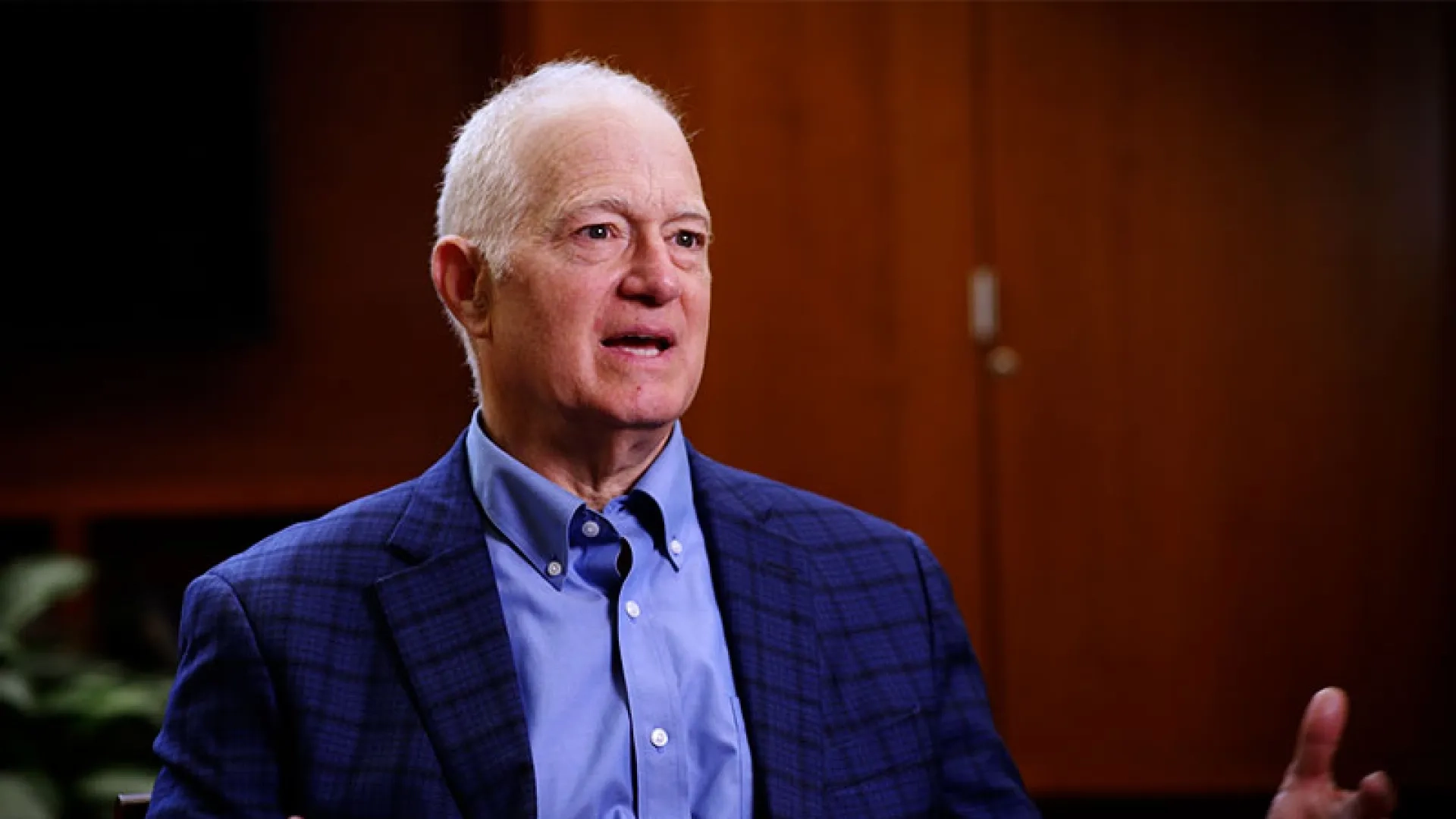
“The integration of the student experience at the University is very important to us,” said Brown. “First, it enriches and broadens the student experience. Second, it gives the health system an even better chance of attracting the graduates of those programs into its many different components, all of which have needs across all of those health professions areas.”
Deepening Clinical Learning Across the System
Indeed, Mass General Brigham University leaders see the shared identity as an opening to broaden clinical learning across the system, drawing on its network of hospitals and programs to give students experience across a range of care settings.
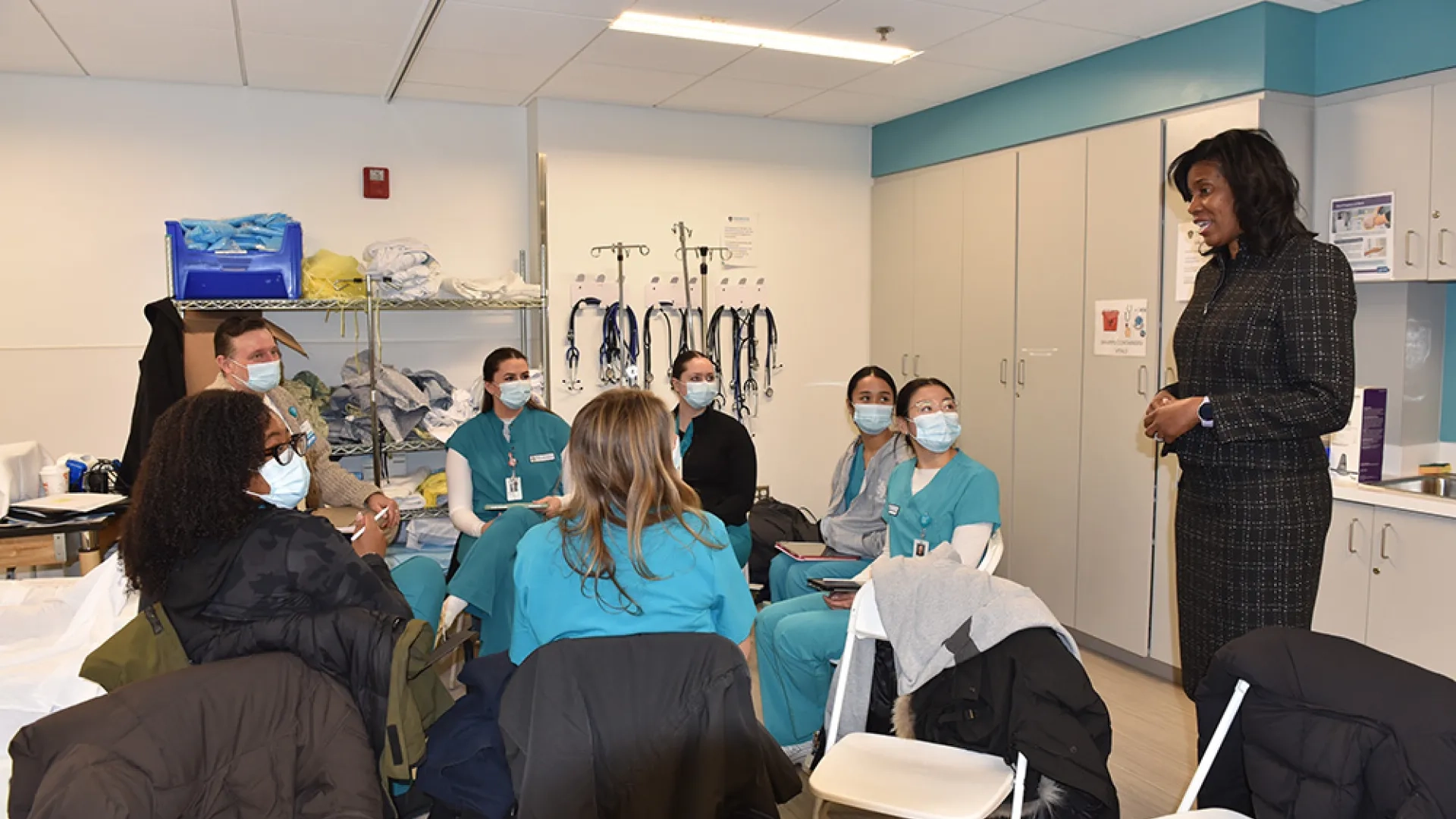
Clinical learning at the University is interprofessional by design. Future nurses, therapists, physician assistants, and scientists learn side by side and train in teams, which is how care is actually delivered inside a health system. Expanding that model across Mass General Brigham requires growth, and University leaders have been explicit that growth has to be matched to faculty capacity, clinical placement capacity, and space. A principle surfacing repeatedly during President Jones’ first few months in office put it plainly: The University cannot break what works as it builds what comes next.
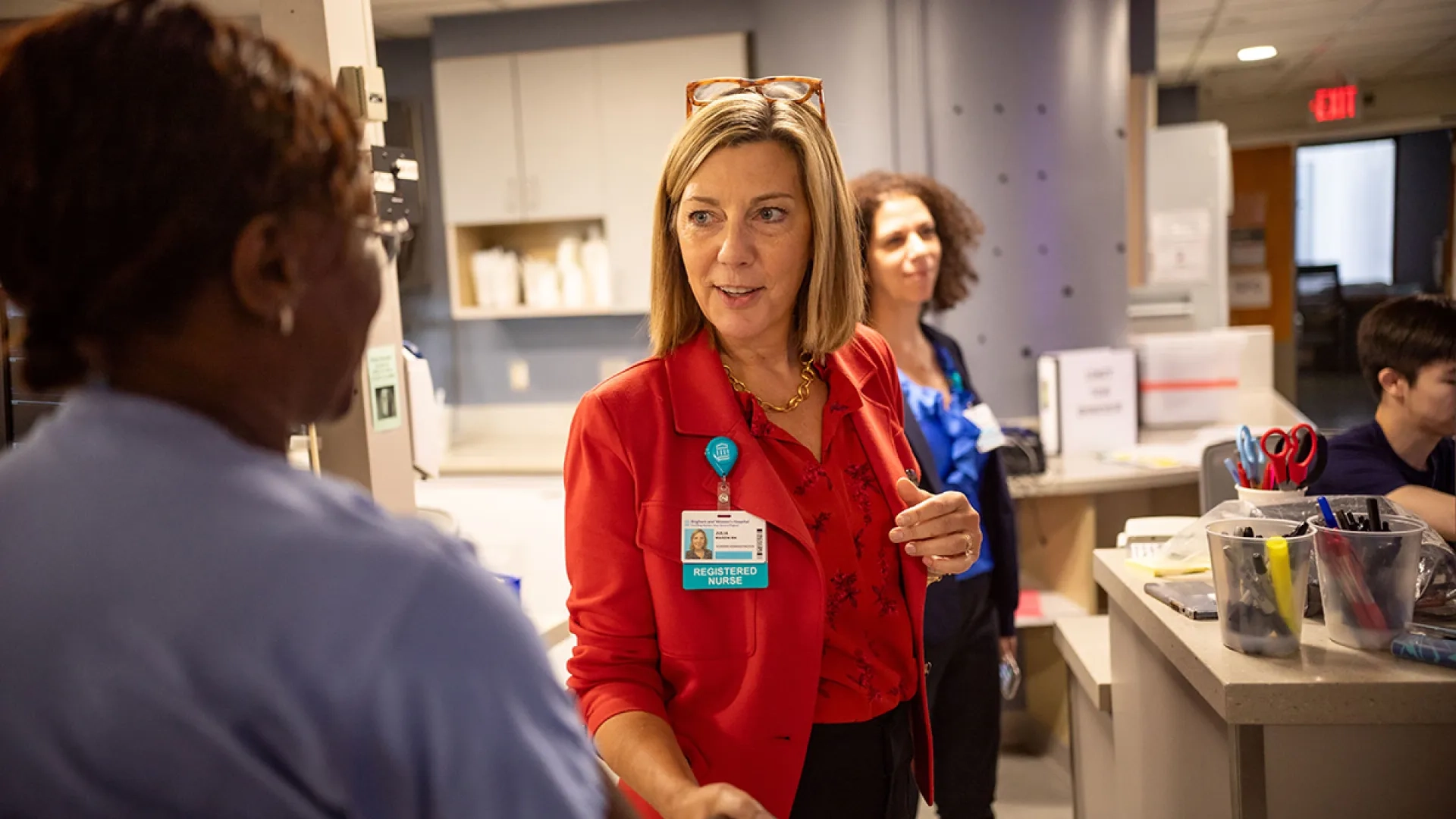
“Now that it’s Mass General Brigham University, I think it will open the door for more students to have their clinicals across the system,” noted Julia Mason, the chief nursing officer at Brigham and Women’s Hospital and a member of the Mass General Brigham University of Health Professions Board of Trustees. “This will make it so the University truly feels like it’s part of the system.”
It hasn’t taken long for Mason, who arrived at Brigham and Women’s two years ago, to see what sets the University’s students apart.
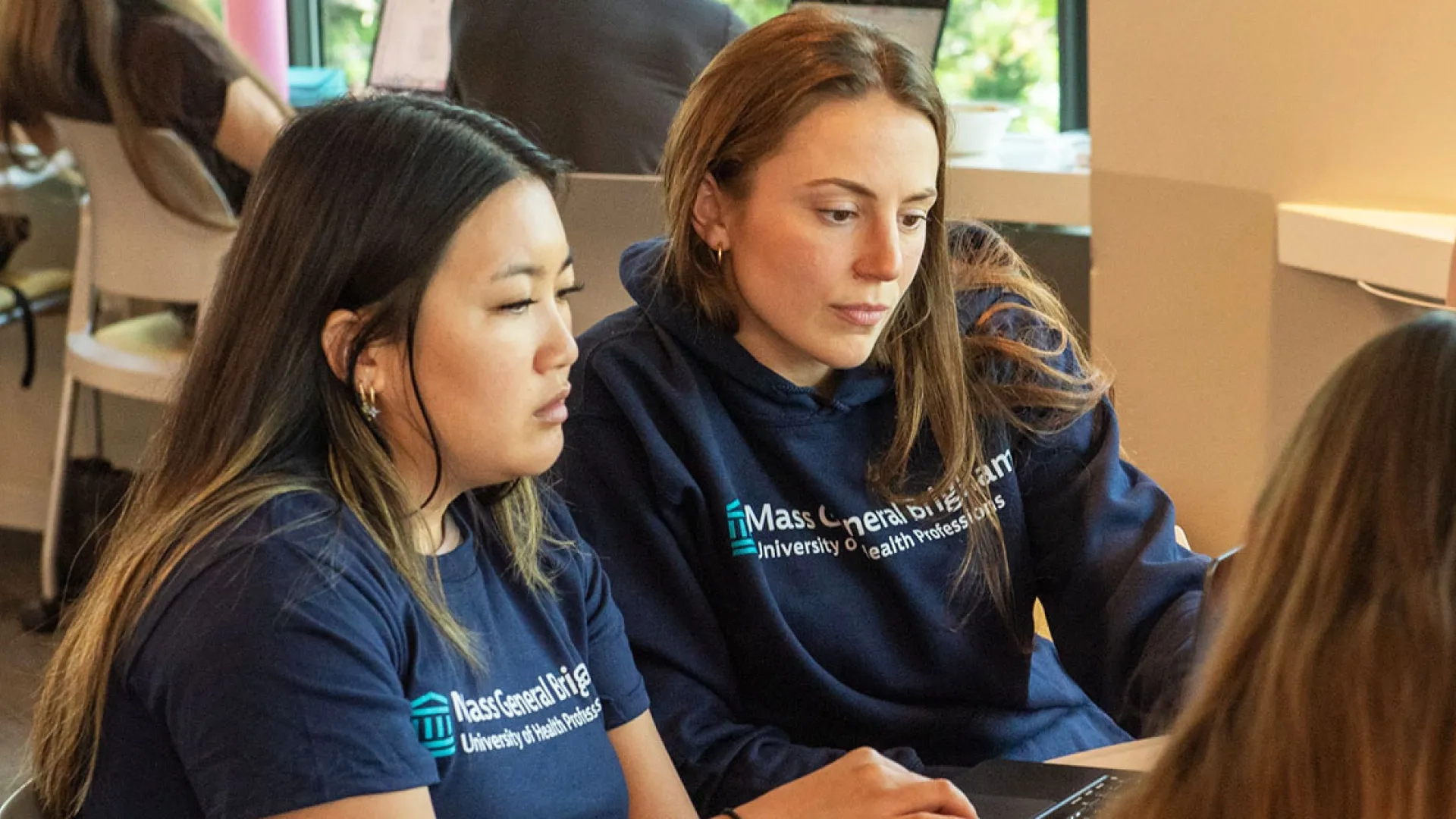
“There’s a level of maturity that comes with these students’ knowing that this is what they want to do because they had an undergraduate degree in something else,” she said. “Many of them have held jobs in other professions and realized that they want to be a nurse or a physical therapist or hold another healthcare role, and they’ve made a deliberate choice to attend a very competitive program.
“So we want them to be here at the Brigham, and everywhere in the system. Those University students are part of our community.”
Mason says students who complete rotations inside the system come with advantages when they are hired, including an existing understanding of the Epic electronic health record system, familiarity with how the hospitals approach patient care, and a shorter onboarding process that saves time and money.
“We’ll hear comments from our nurses and nursing leaders like, ‘We have to hire this student because she’s a keeper’,” said Mason. “Even if they don’t have openings on their unit, they want to figure out how to hire many of these students who have done so well in their rotations. Their degree sets them apart in the interview process.”
A Larger Presence Within Mass General Brigham
The school’s long-standing connection to Mass General Hospital helped build a strong pipeline of graduates to the hospital. Now, its transition to Mass General Brigham University creates an opportunity to extend that success across the system, an evolution that Jacquie Liddell, vice president of talent acquisition and workplace development for Mass General Brigham, expects to accelerate.
“I expect Mass General Brigham University to be viewed as more of a system-wide resource, because it feels like a shared resource instead of something that’s generally been identified primarily with Mass General Hospital. So I do think that’ll help a great deal,” said Liddell.
Liddell said her team is working to increase the number of new hires from the school’s School of Health and Rehabilitation Sciences programs. According to the University’s Office of Accreditation, Institutional Research & Effectiveness, 35% of 2024 graduates across five SHRS direct-entry programs (genetic counseling, occupational therapy, physical therapy, physician assistant studies, and speech-language pathology) were employed by a Mass General Brigham entity within one year of graduation.
Among 2024 graduates of the University’s Bachelor of Science in Nursing and Direct-Entry Master of Science in Nursing programs, 59% were employed by a Mass General Brigham entity within one year of graduation, thanks in part to a Transition to Practice Program, a one-year residency designed to support newly hired graduate nurses at Mass General Brigham.
The University aims to further strengthen pathways connecting graduates with employment opportunities across the Mass General Brigham system. As of March 2026, approximately 2,000 university alumni from graduating cohorts dating back to August 1983 were employed at Mass General Brigham sites, representing approximately 17% of graduates from those cohorts. Broken down by school, approximately 20% of School of Nursing graduates and 13% of SHRS graduates were employed by Mass General Brigham.
The relationship runs in both directions. The University supplies the system with the clinicians it needs, and the system supplies the University with the clinical settings, research infrastructure, and practice questions that shape what is taught. The relationship also carries value into the surrounding community. Through the Sanders IMPACT Practice Center, students and faculty have delivered $1.25 million in care at no cost to local residents, one example of a model the University builds and the system can adopt.
Mass General Brigham is constantly evaluating the needs of each hospital within the system, explained Liddell, using a more streamlined recruitment process to ensure candidates are considering all the different career options the system has to offer.
“This allows us to work behind the scenes to find the right match for people,” she noted.
“We have the opportunity to build more intentional pipelines: students who train in Mass General Brigham settings, learn from its clinicians, understand its standards of care, and then see themselves building careers across the system,” said Jones. “Clinical education and workforce planning have often been treated as related but separate activities, but a shared identity allows us to think more strategically together. It helps clinical education become part of workforce planning, and workforce planning becomes part of academic program design.”
A trend that’s growing rapidly across health care is providing care to patients outside the traditional inpatient nursing environment, says Mason. She envisions the University pivoting to create educational paths that reflect those changes.
“We’re going to need more and more nurses in that space as it shifts to more visits in the home and virtual care, and that’s where the school can be innovative, with the ability to pivot based on where we see health care going,” Mason shared. “It’s going to be helpful to the system as a whole because we’re going to have students that are ready for this type of care.”
“We want to tie it all back to meeting the needs of Mass General Brigham, which will lead to better career placements for the students,” Liddell said. “Having a university brings such added value. How many healthcare systems can say they have that resource?”
All of which speaks to what having a university of health professions within an academic health system brings to the table.
“It’s valuable because we have long-term workforce needs, and many of those students become our workforce of the future,” said Brown. “And it's valuable because we can draw on the research and innovation that the university generates to train that future workforce - and apply it to our academic mission across the health system.
Research That Reaches Further
Among the first things Nara Gavini did in 2019, after being hired to lead the school’s research enterprise, was meet with the senior vice presidents of research of the hospitals within the then-Partners HealthCare, the precursor to Mass General Brigham, which had been created in 1994.
“They really didn’t know what the MGH Institute was,” recalled Gavini, the school’s associate provost for research. “In almost every meeting, I found myself first explaining what the IHP was, what we did, and that we were an academic institution with a strong research enterprise and nationally recognized researchers. Because of our name, we were primarily associated with Massachusetts General Hospital rather than recognized as an independent academic institution within the health system. That was a challenge we needed to address.”
Despite that lack of recognition, the school’s researchers had received significant grants for several years. The Institute already had a strong but underrecognized base of research talent. Through intentional mentoring, greater visibility, and clearer pathways to a broader range of funding mechanisms, faculty were supported in developing their research programs, pursuing new opportunities, and building confidence as investigators. These efforts helped create renewed excitement around research and scholarly work across the institution.
Their work has paid off; today, several of the current 72 active grants are R01 grants, considered to be the gold standard of research, and come from the National Institutes of Health, the National Science Foundation, and industry partners. Now with a research portfolio that tops $52 million, the school has one of the fastest-growing research enterprises within the Mass General Brigham system.
“Expanded opportunities for collaboration across Mass General Brigham could bring together the IHP’s strong research foundation, its close connection to health professions practice, and the scientific expertise across the health system,” Gavini said, noting that 40% of publications are in collaboration with researchers in the Mass General Brigham system, a number he predicts will grow. “These partnerships can spark new interdisciplinary research, strengthen faculty engagement, and accelerate the translation of discovery into clinical practice and patient care.”
The collaboration promises to have a ripple effect. Take students in the PhD in Rehabilitation Sciences program. Approved by the Board of Trustees in 2009, when the school recruited speech-language pathologists Drs. Jordan Green and Tiffany Hogan as its first two full-time researchers, the program’s growth has been limited by a relatively small number of placements and accompanying mentors in the school’s 15 research labs and centers. Another two full-time researchers who are approved for Fiscal Year 2027 will help alleviate that shortage, but Gavini says there now are new possibilities beyond the school’s campus.
“Mass General Brigham has about 4,000 research labs, and they like to mentor PhD students in addition to postdocs,” said Gavini. “That creates real capacity for mentoring, which will help us grow the number of students in the program.”
Strong and productive collaborations are already taking shape at Spaulding Rehabilitation Hospital, where researchers are engaging the school’s students in their research programs. Gavini sees this as an early model that can be expanded across the health system.
“We have developed the proof of concept. Now we can build on it and extend the same model to Mass General, Brigham and Women’s, and other Mass General Brigham laboratories where investigators are interested in mentoring students and developing new collaborations with IHP faculty,” he said. “Now that we share the Mass General Brigham name, I expect those conversations to be easier to start.”
The Next 50 Years
The new name promises to expand the school’s standing in myriad ways, said Jones. That includes better name recognition to recruit students, faculty who want their work to matter beyond the classroom, researchers who can engage questions that emerge from real clinical and community needs and can improve practice, education, and outcomes for patients and communities, and staff, for whom it will clarify the scale and significance of the role they play in the University’s mission.
None of this rests on the name alone. In her first months as president, Jones undertook a structured listening tour with a broad range of the University community, including faculty, staff, students, trustees, alumni, and partners. What she heard helped clarify the University’s priorities for its next chapter and laid the foundation for a broader agenda focused on strengthening the institution, deepening its connection to Mass General Brigham, and expanding its impact.
“The University’s position within Mass General Brigham is one of our greatest differentiators,” Jones pointed out. “It gives us a powerful home base, a living laboratory for innovation, and clinical and research connections built inside the system where our students train. From that foundation, we have the opportunity, and I believe the responsibility, to contribute not only to Mass General Brigham’s future but also to the future of health professions education more broadly.”
The ambition Jones describes reaches far past recruitment. The measure of a university central to the mission of a health system is ultimately its impact on the students it prepares, the workforce it strengthens, the partners it brings together, and the care patients receive.
From a philanthropic standpoint, Jones feels the University now can better attract individual donors who want to invest in the future of health care; corporations and foundations that focus on workforce, innovation, and partnership; and companies that care about health care, technology, rehabilitation, aging, behavioral health, access, or community health. Jones said the fundraising also can support scholarships, academic centers, faculty research, interprofessional education, simulation, community-based programs, and new models of care and education.
“A gift to Mass General Brigham University of Health Professions helps prepare the clinicians, educators, researchers, and leaders who will shape care for patients and communities,” said Jones.
“We like to think of the University as a shining example, not just regionally but nationally, for how other health systems might train their workforces of the future.” reflected Brown. “It’s really a jewel within Mass General Brigham.”
And as the University approaches its 50th anniversary in March 2027, it is positioned to expand its role in the healthcare system.
“Ultimately, I want the system to be stronger because we exist,” shared Jones. “I want Mass General Brigham to be able to anticipate workforce needs earlier, educate talent more intentionally, accelerate evidence into practice, and strengthen care for patients and communities.
“Our ambition is to show what health professions education can be when it is deeply connected to a health system and what is possible for students, for the workforce, and for the communities we serve.”