


Interprofessional Wellness Groups Improve Collaboration Skills While Supporting Community Health
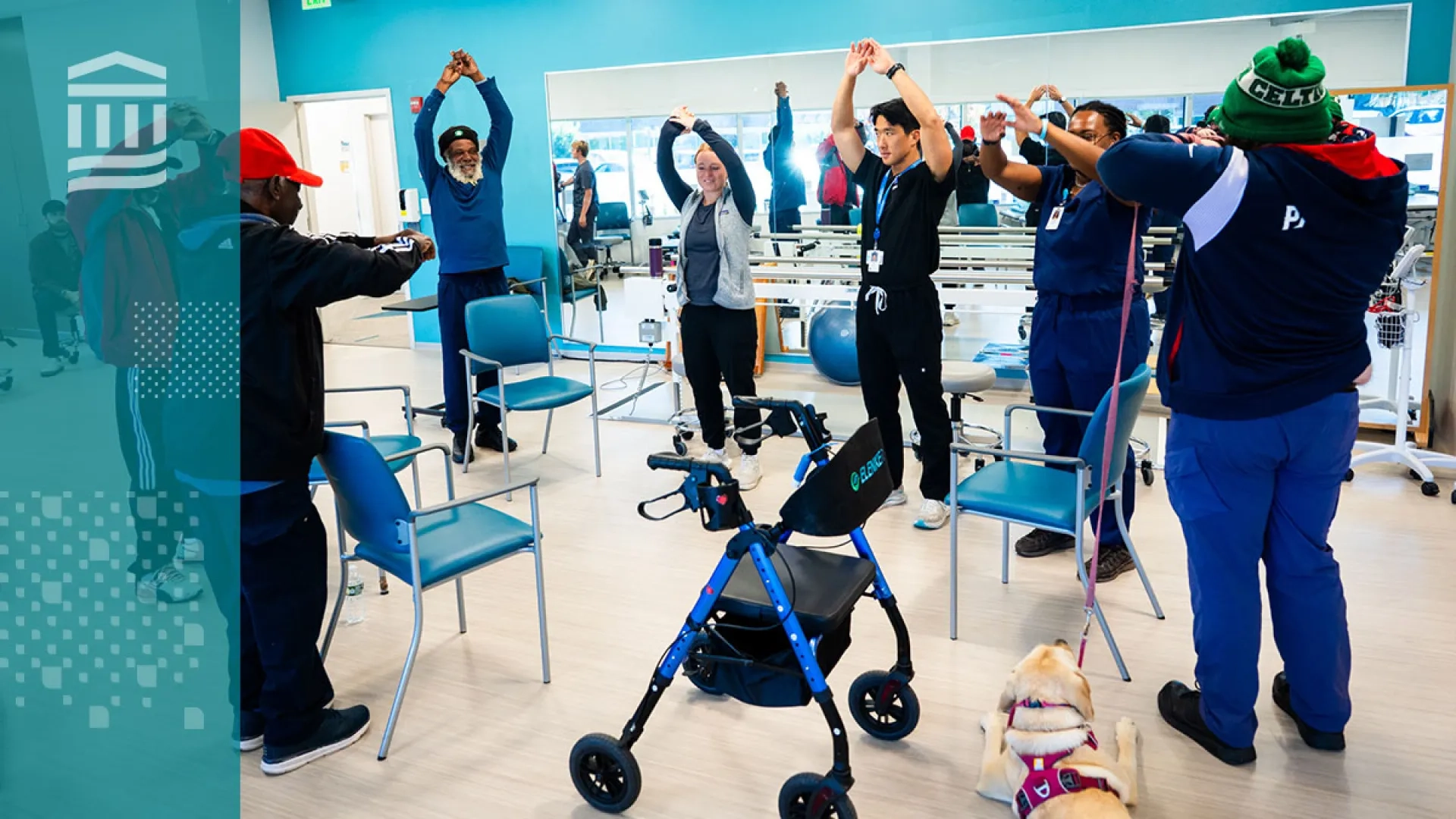


Healthcare rarely happens in isolation. A patient recovering from a stroke, managing Parkinson’s disease, or living with another chronic condition may need support from several professionals, including nurses, physical therapists, occupational therapists, speech-language pathologists, and other members of the care team. Learning how to work across disciplines is an essential part of preparing health professions students for clinical practice..
That is where interprofessional education plays an important role. It gives students structured opportunities to learn with, from, and about one another so they can better understand each profession’s role in patient-centered care. A recent article by Mass General Brigham University faculty Rachel Pittmann, Lesley Smith, and Kathryn Sabo describes one model that brings this kind of learning into direct service with the community: Interprofessional Wellness Groups.
What Are Interprofessional Wellness Groups?
The Interprofessional Wellness Group model was developed at Mass General Brigham University as a student-led, faculty-supported clinical education experience. Students from different health professions work together to plan and lead wellness sessions for community members living with chronic health conditions.
The model has included students from nursing, physical therapy, occupational therapy, genetic counseling, and speech-language pathology. Together, they develop wellness education sessions that respond to participant needs, rather than approaching care from only one professional perspective.
According to Pittmann, Smith, and Sabo (2025), the model gives students a way to practice interprofessional collaboration while providing disease-specific wellness education to community participants. The groups have focused on populations such as adults recovering from stroke, people with aphasia, adults with Parkinson’s disease, older adults with chronic conditions, and individuals affected by COVID-19.
Learning Team-Based Care Through Practice
The wellness groups follow a clear structure. Students first learn about each profession’s role and consider the needs of the participants they will serve. They then work in interprofessional teams to choose topics, create materials, and prepare activities. Faculty provide guidance, feedback, and supervision throughout the process.
Student-led sessions have covered topics such as nutrition, healthy snacking, disease-specific exercises, chair-based movement, mindfulness, health advocacy, healthcare navigation, and community resources. After each session, faculty guide students through reflection and feedback, helping them identify what worked well and what they could improve.
This reflective structure matters because clinical education does more than teach students what to know. It helps them practice how to communicate, adapt, listen, and respond in real time. In the Interprofessional Wellness Group model, students apply classroom knowledge while also learning from the lived experiences of community participants.
What the Article Found
The main outcome of the article was positive for both students and participants. Students reported growth in interprofessional collaboration competencies and group leadership skills, while community participants reported satisfaction, support, and benefit from the program.
Student outcomes were measured using the Interprofessional Collaborative Competency Attainment Scale. Results showed statistically significant improvement across all measured areas, including communication, collaboration, roles and responsibilities, patient-centered care, and conflict management and team function (Pittmann, Smith, & Sabo, 2025).
The strongest areas of student growth were collaboration and understanding roles and responsibilities. This suggests the model helped students see how different disciplines contribute to care and how those contributions can work together to support the needs of participants.
Students also described the value of hearing directly from community members. Their feedback showed that the wellness groups helped them understand what matters to people living with chronic conditions, including how participants manage daily routines, barriers, and health-related challenges. This type of experience can help students move beyond textbook knowledge and develop a stronger sense of patient-centered care.
What Participants Gained
Community participants also responded positively to the wellness groups. They reported that students and faculty were respectful, knowledgeable, and effective in their communication. Participants also said they benefited from the program and expressed interest in attending future groups (Pittmann, Smith, & Sabo, 2025).
One important theme from participant feedback was the value of connecting with others who shared similar health experiences. For people living with chronic conditions, community wellness programs can provide more than information. They can also offer encouragement, connection, and a space to exchange practical strategies.
This is one reason the model stands out. It supports student learning while also creating a meaningful experience for community members.
Why This Matters for Future Health Professionals
For prospective students, this study offers a useful example of what strong health professions education can look like. Interprofessional education is about learning the language of teamwork and practicing collaboration in settings where real people bring real questions, needs, and experiences.
The Interprofessional Wellness Group model helps students build skills that carry into clinical practice, including communication, role clarity, shared planning, health teaching, and reflection. It also reinforces the importance of designing care around the people being served.
The model is also flexible. Pittmann, Smith, and Sabo (2025) note that it has been used with different health conditions, different student teams, and both in-person and virtual formats. That flexibility makes it a promising approach for clinical education programs that want to connect student learning with community wellness.
About the Researchers
The research was authored by three Mass General Brigham University of Health Professions faculty members with expertise across interprofessional education, speech-language pathology, physical therapy, and nursing. Rachel Pittmann, PhD, CCC-SLP, FNAP, CHSE is an Assistant Professor in the Department of Communication Sciences and Disorders and an Assistant Dean in the Center for Interprofessional Education and Practice. Lesley E. Smith, PT, DPT, MS, GCS, is an Assistant Professor in the Department of Physical Therapy. Kathryn Sabo, PhD, RN, CNE, is an Assistant Professor in the School of Nursing and Director of the Ruth Sleeper Nursing Center for Clinical Education and Wellness.
Citation