


From Sticky to Engineered: Designing Education That Lasts
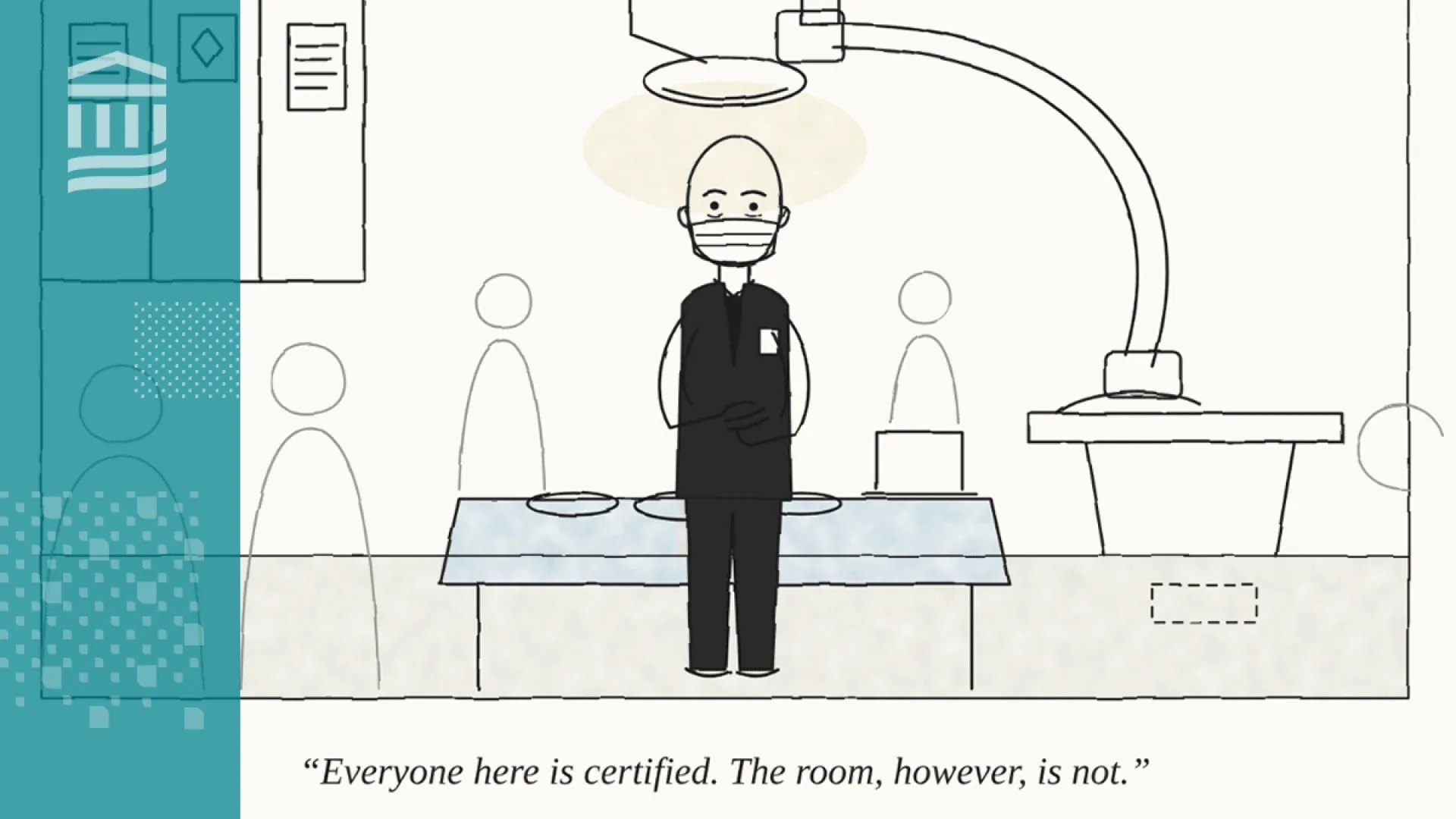


In education, we love the word “sticky.” We want lessons that stick, skills that stick, knowledge that stays put long after the workshop ends. It is a comforting metaphor. But the more I work in health professions education, the more I think “sticky” is the wrong word. For one, it puts all the responsibility on the learner and the lesson, and almost none on the environment around them. For another, it carries the seeds of its own failure: anything sticky eventually loses its tack. Adhesives dry out, surfaces collect dust, and sooner or later things peel off and fall away. Stickiness is temporary by nature, which is exactly the wrong promise to make about a lifesaving skill.
Consider CPR. Nearly all of us in healthcare have taken ACLS, practiced compressions in a simulation lab, and walked out certified. Yet study after study shows that low-quality CPR remains pervasive, even among those who have been trained. When 12 nursing programs implemented the Resuscitation Quality Improvement (RQI) system, fewer than half of their students could perform high-quality CPR at baseline, even though about 90% had completed prior CPR training (Kardong-Edgren et al., 2025). I saw this firsthand while observing a simulated cardiac arrest in the cardiac cath lab. A cath lab is a place where cardiac arrest is a recognized risk. Even so, the environment made high-quality compressions genuinely hard to deliver: a table set at procedural height rather than compression height, an overhanging C-arm limiting where a rescuer can position, no stool on hand for leverage, and an active procedure already underway (Jafri et al., 2024). None of this reflects poorly on the clinicians; it shows how much the surroundings shape what is possible in the moment. Put the two stories together and the picture is complex. These were certified people who had passed the test, yet in the simulation lab the skill had decayed since certification, and in the cath lab the environment worked against the team. Skill decay and environment are both real, and both have to be addressed. Encouragingly, structural supports can help: a CPR coach, a dedicated member of the resuscitation team who gives real-time feedback on compression depth, rate, and recoil, has been shown to improve the quality of CPR delivered at the bedside (Cheng et al., 2018), precisely because it acts on the moment of performance rather than the moment of instruction. Making the lesson stickier may not be enough; we have to build for all of it.
Over the years I have drawn on the evidence-based instructional strategies known to support durable learning. Rapid cycle deliberate practice breaks a skill into micro-segments and loops the learner through “pause, coach, rewind, repeat” until they reach mastery rather than simply completing the scenario. Spaced repetition fights the forgetting curve by distributing practice across time instead of front-loading it into one session. Active learning replaces passive reception with retrieval, problem-solving, and doing. Each of these works, and each taught me the same lesson: they only deliver when something in the surrounding system schedules them, prompts them, and protects the time for them. A great method with no structure to carry it is just a good day that fades.
So how do we keep a perishable skill alive once the course is over? That question has driven much of my own research. Stop the Bleed (STB) is, like CPR, a lifesaving skill that has a certification. Unlike CPR, which requires repeat certifications, STB ends in a one-time certification, and as an STB instructor I wanted to understand what actually makes it last. Much of our work threw technology at the problem. We added simulation and a feedback device to the standard bleeding-control course; skills and confidence climbed right after training, but when we retested months later, retention was poor across every group (Jafri et al., 2021). We added an immersive virtual-reality refresher to EMT tourniquet training, expecting the realism and repeated practice to make the skill hold; it did not move retention either, and the VR group actually made more tightening errors, because a headset cannot reproduce the physical force of cinching a real tourniquet (Arif et al., 2023). However engaging the modality, the training day did not make the skill endure.
A different approach changed the picture. Rather than leaning on memory, we put a just-in-time cognitive aid in the learner’s hands at the moment of need; bystanders using a point-of-care app more than doubled their rate of correct tourniquet application compared with those relying on training alone (Dadario et al., 2021). A larger randomized trial of more than 300 laypersons sharpened the finding: a cognitive aid that delivered visual and audio cues during the tourniquet application itself improved placement, and the effect was strongest for learners who had been trained and introduced to that aid beforehand (Dadario et al., 2023). The aid worked best not as a substitute for training, but as a familiar structure that guided the hands in real time, at the point of need. Taken together, these studies point the same way: more or fancier instruction up front did not keep the skill alive, but a support engineered into the moment of performance did. None of this means the lesson does not matter; active, deliberate practice is still how the skill is built. What our work adds is that the skill endures when that training is paired with the structures and environmental cues around it, not when we rely on the training alone.
Everything so far is procedural, the work of the hands: compressions, tourniquets, wound packing. But the same principle reaches well beyond procedures. In work now under review, we extended it to communication, using an AI coach to support clinicians during telehealth encounters in real time, at the point of the conversation rather than in a classroom beforehand. Even for a skill as fluid as communication, building the support into the moment, not only the training, made the difference.
The Donabedian model gives us a better frame. Donabedian taught us that outcomes depend on structure and process. If we want better educational outcomes, we have to design better structures and processes around the learner: coaches, refreshers, prompts, feedback loops, and workflows that assume we are all lifelong learners, not one-time graduates.
So maybe it is time to retire “sticky.” Sticky things fall off; that is what they do. What we are really after is not adhesion but durability, learning that is built to last and maintained over time. We are not making lessons stick; we are engineering the conditions in which learning endures. Instructional design was never just the classroom. It is systems design. Let us stop trying to make learning sticky and start building for engineered learning.
Reference material
Kardong-Edgren, S., Nikitas, D., Gavin, E., DiGregorio, H., O’Keefe, D., Opsahl, A. G., & Sharpnack, P. A. (2025). Implementation of the RQI system: Baseline skills and self-report competence and confidence data from 12 NLN inaugural change agent nursing programs. Nursing Education Perspectives, 46(1), 5–12. https://doi.org/10.1097/01.NEP.0000000000001357
Cheng, A., Duff, J. P., Kessler, D., Tofil, N. M., Hunt, E. A., Lin, Y., Donoghue, A., & Brown, L. L. (2018). Optimizing CPR performance with CPR coaching for pediatric cardiac arrest: A randomized simulation-based clinical trial. Resuscitation, 132, 33–40. https://doi.org/10.1016/j.resuscitation.2018.08.021
Jafri, F. N., Santana Felipes, R. C., Bliagos, D., Torres, R. E., Bellido, S., Arif, A., Elwell, D., Mirante, D., Ellsworth, K., Cardasis, J., Anastasian, G., Pinto, H., & Kochar, A. (2024). Stress testing the cardiac catheterization laboratory: A novel use of in situ simulation to identify and mitigate latent safety threats during acute airway management. Simulation in Healthcare, 19(2), 75–81. https://doi.org/10.1097/SIH.0000000000000725
Jafri, F. N., Dadario, N. B., Kumar, A., Silverstein, S. R., Quintero, F., Larsen, E. A., Fasciglione, K., Mirante, D., Ellsworth, K., Amicucci, B., & Ricca, J. (2021). The addition of high-technology into the Stop the Bleed program among school personnel improves short-term skill application, not long-term retention. Simulation in Healthcare, 16(6), e159–e167. https://doi.org/10.1097/SIH.0000000000000546
Dadario, N. B., Santana Felipes, R. C., Cooney, J. V., Stephenson, K. M., Shleiwet, N. H., Liang, T., & Jafri, F. N. (2021). The impact of a mobile phone application for retention of bleeding control skills. Journal of Surgical Research, 267, 669–677. https://doi.org/10.1016/j.jss.2021.06.021
Arif, A., Santana Felipes, R. C., Hoxhaj, M., Light, M. B., Dadario, N. B., Cook, B., Cataldo, M. J., & Jafri, F. N. (2023). The impact of the addition of a virtual reality trainer on skill retention of tourniquet application for hemorrhage control among emergency medical technician students: A pilot study. Cureus, 15(1), e34320. https://doi.org/10.7759/cureus.34320
Dadario, N. B., Shleiwet, N. H., Santana Felipes, R. C., Cook, B., Cooney, J. V., Stephenson, K. M., Elsmore, M., & Jafri, F. N. (2023). Use of cognitive aids to augment point of care hemorrhage control skills in laypersons. Disaster Medicine and Public Health Preparedness, 17, e445. https://doi.org/10.1017/dmp.2023.92