


Seeing the Big Picture of Speech Language Pathology
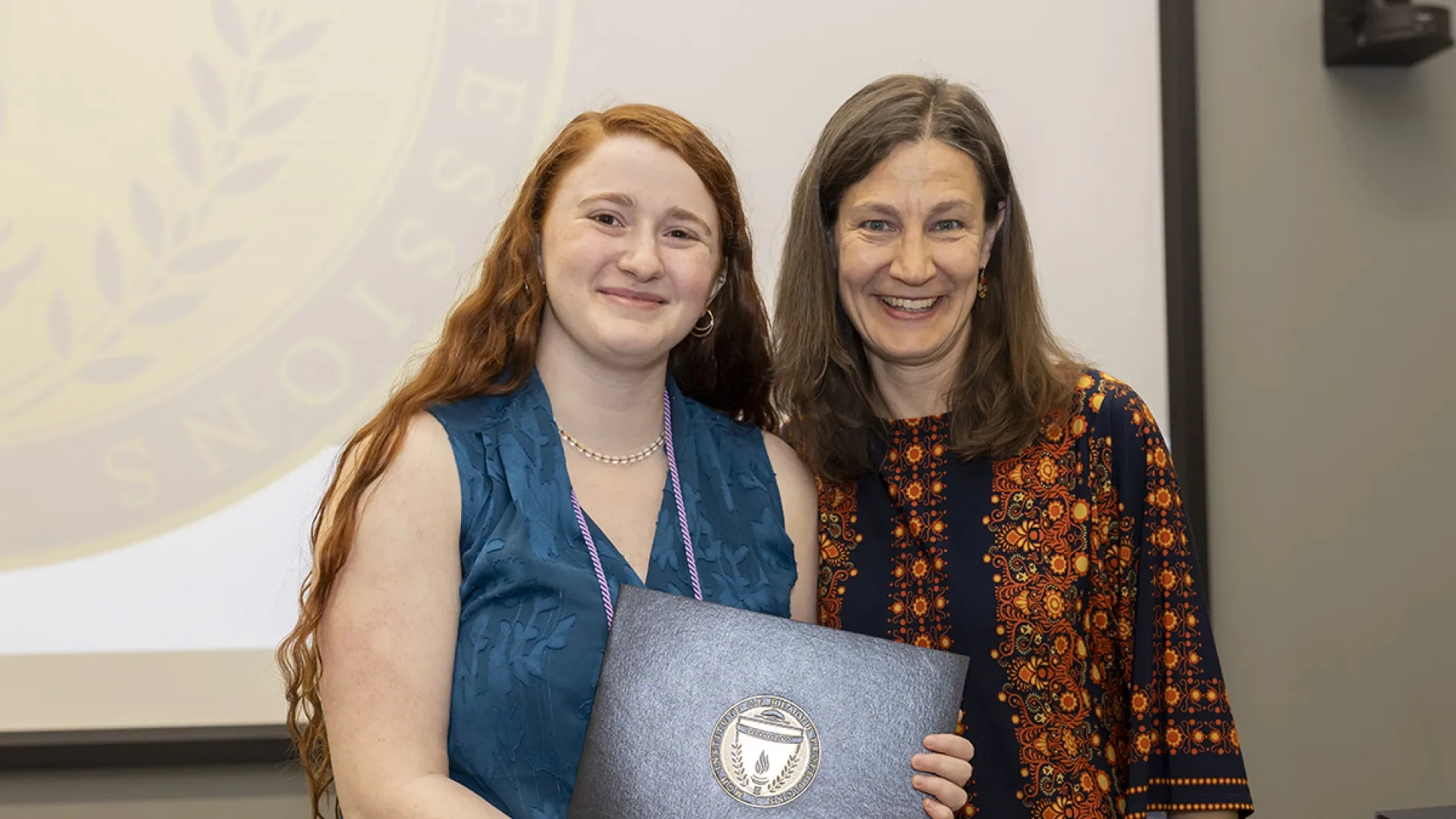


CSD Graduate Helen Cohen's Research Focuses on a Broader Look at Patients' social and family situations
As an undergraduate, Helen Cohen studied linguistics and wanted to become an educator in speech pathology. Then she took a course on death and dying and volunteered at a hospice as part of the class, and she saw the impact speech language pathology and rehabilitation could have in a medical setting. As a result, she enrolled in the MS Speech Language Pathology program, with a focus on medical speech pathology, and graduated this past May.
Medical speech pathologists’ work extends far beyond linguistic help for those with speech impediments. They take an active role in rehabilitation for a range of medical conditions that affect speech, including stroke, throat cancer, breathing difficulties, and ALS. And because the mechanisms of speech are closely related to swallowing, they also treat a range of swallowing disorders.
“I like to say that we work on the things that add life to your years,” she said. “A lot of what we do is really focusing on rehabilitating core parts of life, like talking to your loved ones or being able to eat and drink. That’s why my experience with the hospice offered me this different perspective on what we can do. Because that was all about figuring out how you bring comfort and relief to patients and improve quality of life.”
During her time in the MS-SLP program, Cohen worked on two research projects focused on the main feeding disorder that impacts children, Pediatric Feeding Disorder, in collaboration with Institute alum Meg Simione, PhD, who now runs the Feeding Innovation Lab at the University of Rhode Island, while she was a postdoctoral research fellow in the Pediatric Nutrition Center at Mass General Brigham for Children. The research entailed developing a framework that prompts healthcare professionals to ask more questions about the socio-contextual and social determinants of health behind a child’s diagnosis so that the information can be integrated into their management of Pediatric Feeding Disorder.
“We created a visual model for understanding the context of a patient beyond just their medical diagnosis with PFD,” explained Cohen. “It helps shine a light on the many factors that impact a child’s ability to successfully maintain nutrition, such as their socioeconomic status, their ability to access food, or ability to access therapeutic treatment, and even factors like complex cultural and social norms about food and mealtimes.”
Cohen’s research projects have captured the attention of the rehabilitation community; she has presented the research at the American Speech-Language-Hearing Association national conference and at the International Pediatric Feeding Disorder Conference and the Dysphagia Research Society Annual Meeting and also shared it recently on the First Bite podcast.
“I think the research struck a chord with people because it offers you this opportunity to have important discussions about people’s lives around their disability,” Cohen said. “By including families and children in those discussions, we can make sure that we’re taking a broader look at the patient’s social and family situation.”
The collaborative relationship Cohen developed with Dr. Simione empowered her to co-develop the project and contribute her input into the research process.
“She allowed me to stretch my legs and work with her in a very collaborative way, and I was able to learn and try out some higher-level research skills,” said Cohen.
As Cohen discovered, this level of collaboration and interprofessional practice is baked into every part of being a student here because of its tight integration with the Mass General Bringham system.
Cohen’s experience with Dr. Simione also broadened her perspective about the connection between clinical research and caring for patients.
“Treating patients and getting to see how the evidence is created for the research that we're working on makes me all the more appreciative and thoughtful about the clinical knowledge we're learning,” explained Cohen, who plans to follow her passion for rural healthcare after graduation, hoping to start to practice in a place that strives to provide the best care despite limited resources.
Associate Professor Lauryn Zipse leads the thesis research program for MS-SLP students, teaching foundational concepts about research and connecting them with mentors within the broader Mass General Brigham University network.
“Seeing students develop their expertise through research is very rewarding,” said Zipse, sharing that many students have an experience similar where the process of engaging in research often strengthens their understanding of clinical problems, patient perspectives and the impact they can have.
“I think that Helen is well-equipped to continue engaging in research and become a leader in her practice,” added Zipse.