


Schwartz Rounds Explores Imposter Syndrome in Healthcare
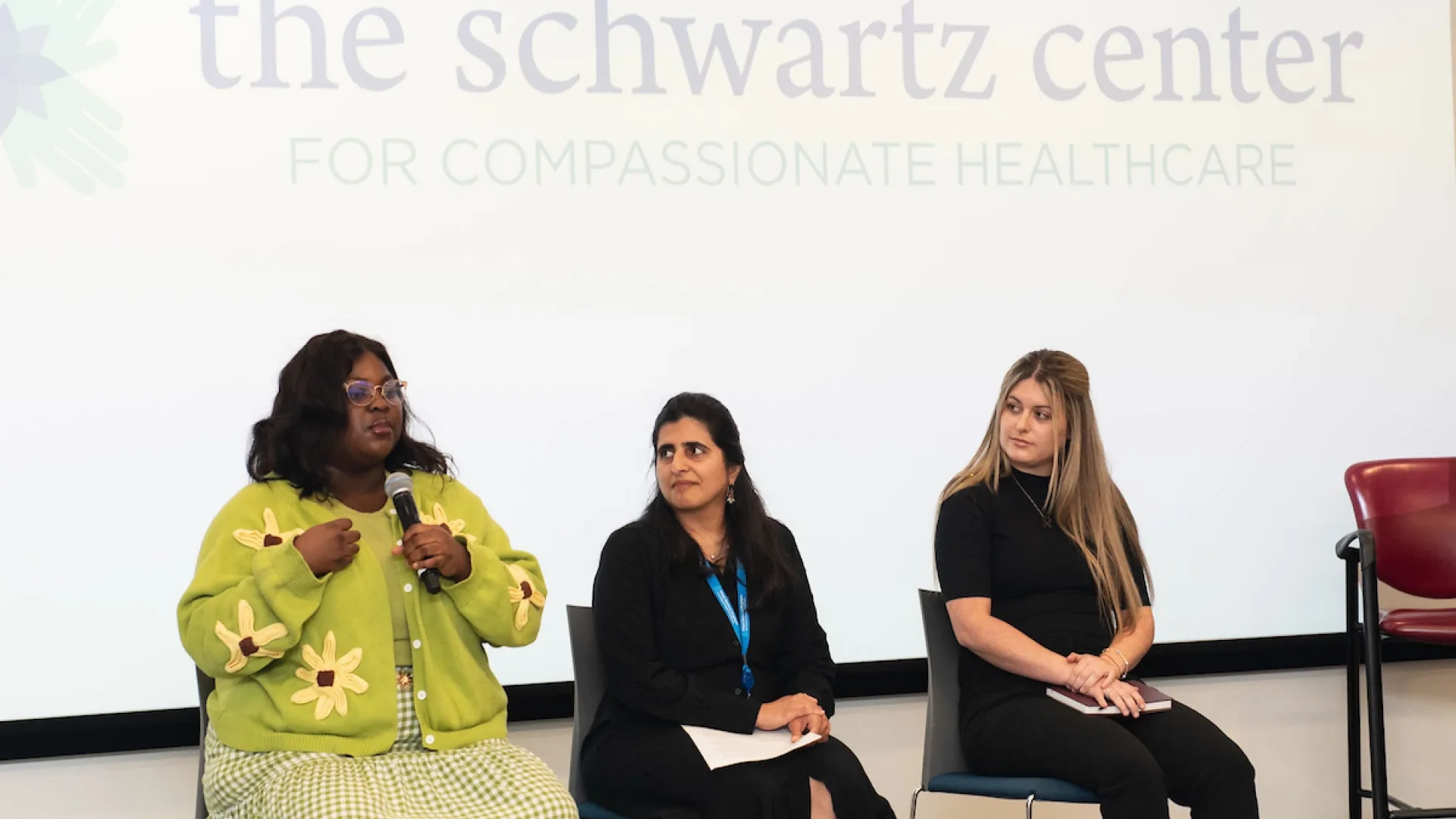


Feelings of self-doubt can follow healthcare professionals throughout their careers, from their first clinical experiences to transitions into new roles. At a recent Schwartz Rounds session hosted by the Center for Interprofessional Education and Practice at Mass General Brigham University of Health Professions, students, faculty, and healthcare professionals came together to share their experiences with imposter syndrome and reflect on the challenges of building confidence in patient care.
The session was facilitated by Emily Eddy, program director of the Entry-Level Doctor of Occupational Therapy program. Three panelists shared personal stories about navigating uncertainty and finding confidence through experience and support.
Tina Akondeng-Azise, a second-year genetic counseling student and HEAL Fellow in the School of Health and Rehabilitation Sciences Dean's Office, discussed how an ADHD diagnosis and encouragement from her supervisor helped her navigate perfectionism. Pooja Jethani, assistant professor of Occupational Therapy, reflected on adjusting to a new academic and clinical environment after moving from India to the United States. Her experience supervising students at a stroke clinic helped her recognize the value of her knowledge and skills. Alexandra "Lexi" Hargrave, RN, a May 2025 graduate of the University's Accelerated Bachelor of Science in Nursing program and a nurse at Boston Children's Hospital, shared how transitioning into pediatric stem cell transplant care taught her that learning a new specialty does not mean starting without competence.
Following the panel, participants discussed how self-doubt can persist even among experienced healthcare professionals. One participant noted that professional certification establishes competence, not expertise, reminding new clinicians that they are not expected to know everything. The conversation also emphasized the importance of having mentors who encourage questions and help build confidence over time.
Schwartz Rounds offers members of the University community a space to speak openly about the emotional side of healthcare. Through personal stories and shared experiences, the program reminds participants that they are not alone in the challenges they face and that caring for healthcare professionals is an important part of compassionate patient care.