


Mass General Brigham University Launches STITCH Lab, a Collaborative Space for Innovation and Creative Problem-Solving
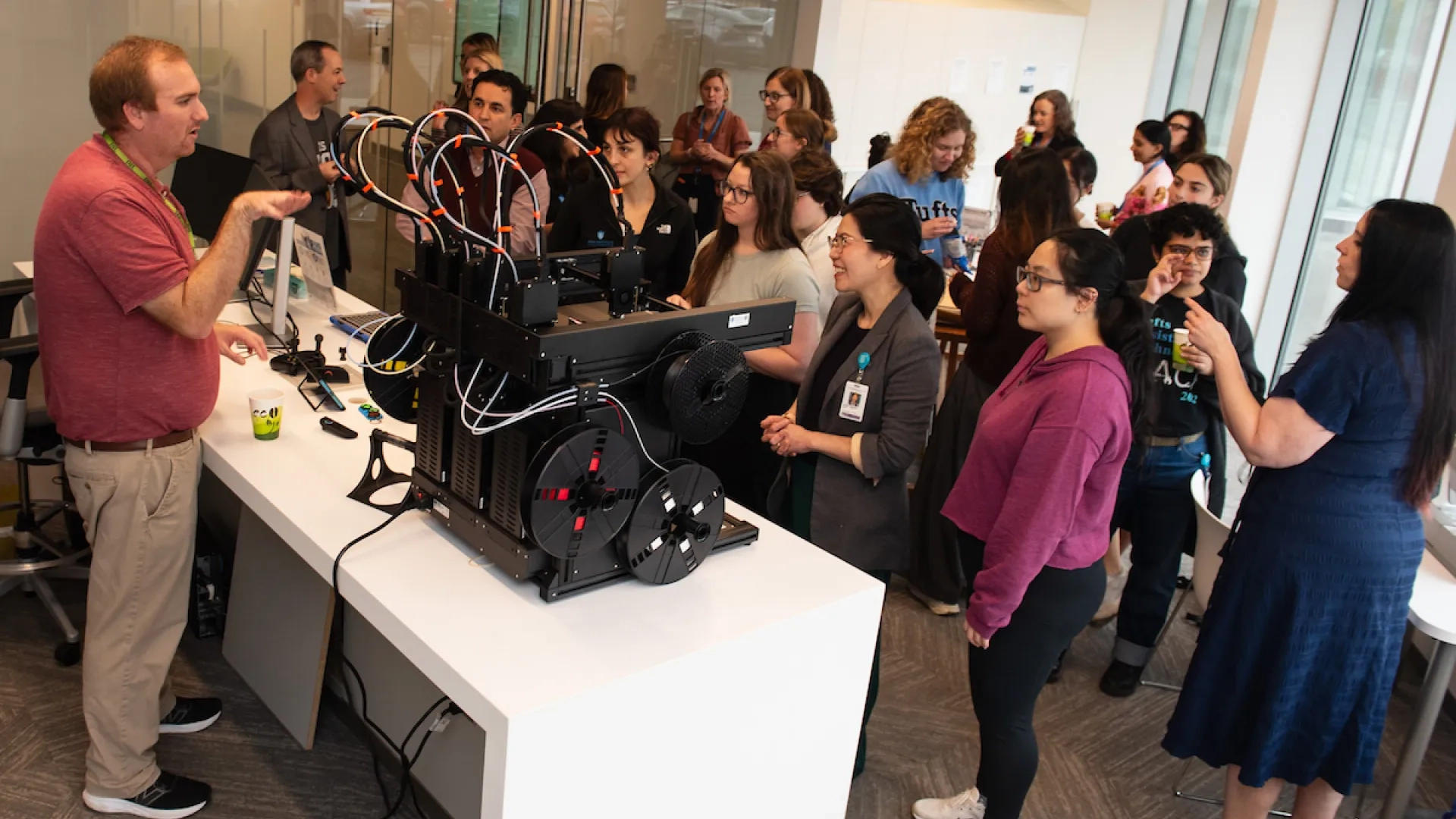


Faculty, staff, and students from across Mass General Brigham University of Health Professions now have a place to come together and design, create, prototype, and test ideas using a variety of tools and technologies.
The STITCH (Student Tech and Innovation for Therapeutic Care and Health) Lab, a collaborative makerspace designed to inspire creativity, encourage interprofessional collaboration, and develop innovative solutions to real-world challenges, held a launch celebration last Thursday in its 1CW location (room 167). It is designed to be a resource for the entire University community, providing a place where different disciplines and perspectives can come together to turn creative ideas into practical solutions that make a difference in people's lives.
Led by Occupational Therapy faculty member Kevin Berner, the lab's interprofessional team includes Greg Moore, senior technology and innovation architect; Kathy Sabo, associate professor from the School of Nursing; Amanda Worek, assistant professor in Communication Sciences and Disorders from the School of Health and Rehabilitation Sciences; and Jessica Bell, Director of the Library. Four student Innovation Fellows will also support the space's day-to-day operations, encourage community engagement, and advance the lab's mission. The space features three 3D printers, a Cricut Maker 4 precision cutter, a heavy-duty sewing machine, soldering tools, and various hand tools.
For Berner, the vision behind the STITCH Lab is rooted in the history of occupational therapy, a profession that has long embraced design and creative problem-solving to help people participate in meaningful everyday activities.
"Occupational therapists have always worked with patients and clients to adapt activities and help them re-engage in meaningful occupations," Berner explained. "Historically, that meant using hand tools to create innovative prosthetics or adaptive equipment. Today, we're using more modern tools and technology while bringing together interprofessional perspectives to solve problems."
The idea for the space grew out of Berner's experience co-chairing an intercollegiate hackathon, where interprofessional student teams collaborate with community-based co-designers, including people with disabilities, to develop solutions to everyday living challenges. The STITCH Lab creates an opportunity to bring that same spirit of collaboration and innovation directly to the University.
The lab is already opening new possibilities for hands-on learning. In an upcoming assistive technology elective, students will use the space to design and build their own accessibility switches, which can help people with disabilities operate communication devices, adaptive gaming equipment, wheelchairs, and toys.
The launch brought together representatives from nearly every University program, along with faculty, staff, and students, demonstrating enthusiasm for the opportunities the space creates.
Moore, who supports the lab's technology and equipment needs and helped establish workflows and ensure the resources meet the needs of faculty, staff, and students, demonstrated some of the technology available in the space.
"Launching something new is always a little nerve-wracking," Moore said. "So, when the community shows up to embrace the concept and excitedly share their ideas, as they did at the launch event, it's awesome to see."